
February 2026


feature
More disciplined market, more disciplined showrooms
With pricing transparency and project complexity rising, distributors are redefining the role of the showroom.
By Natalie Forster
Photo courtesy of WhiteStar Supply
After several years of market upheaval, the residential kitchen and bath industry is settling into a new normal defined less by frenzy and more by intentional, professionally led spending.
According to the 2025 Kitchen & Bath Market Outlook from the National Kitchen & Bath Association (NKBA) the U.S. kitchen and bath market is projected to generate approximately $235 billion in revenue, with repair and remodeling activity expected to grow even as new residential construction moderates. NKBA’s research shows that homeowners continue to prioritize kitchens and baths as high-value investments, particularly when projects are guided by professionals who can help navigate product performance, installation realities, and long-term value.
That emphasis on professional guidance is also reflected in how projects are being scoped. NKBA trend data points to larger kitchen and bath footprints, increased interest in integrated lighting and coordinated finishes, and steady adoption of smart and wellness-oriented features, all signals that homeowners are choosing to improve existing homes rather than relocate. The result is fewer impulse upgrades and more carefully planned projects, with less tolerance for mistakes that delay timelines or force midstream changes.
For plumbing distributors with showroom branches, these macro shifts are quietly reshaping the role of the showroom itself. The showroom is increasingly where projects are clarified, simplified, and de-risked. And across conversations with buying groups and showroom operators nationwide, one message is clear: the showrooms performing best today are the ones leading the sale, not those reacting to it.
“Independent showrooms still have a powerful advantage — but only if they know how to use it,” says Jeffrey Beall, senior advisor, PHCP business unit at AD. “Our focus is helping members stay ahead by leveraging scale, supplier partnerships, and programs that give them a real competitive edge in their markets.”
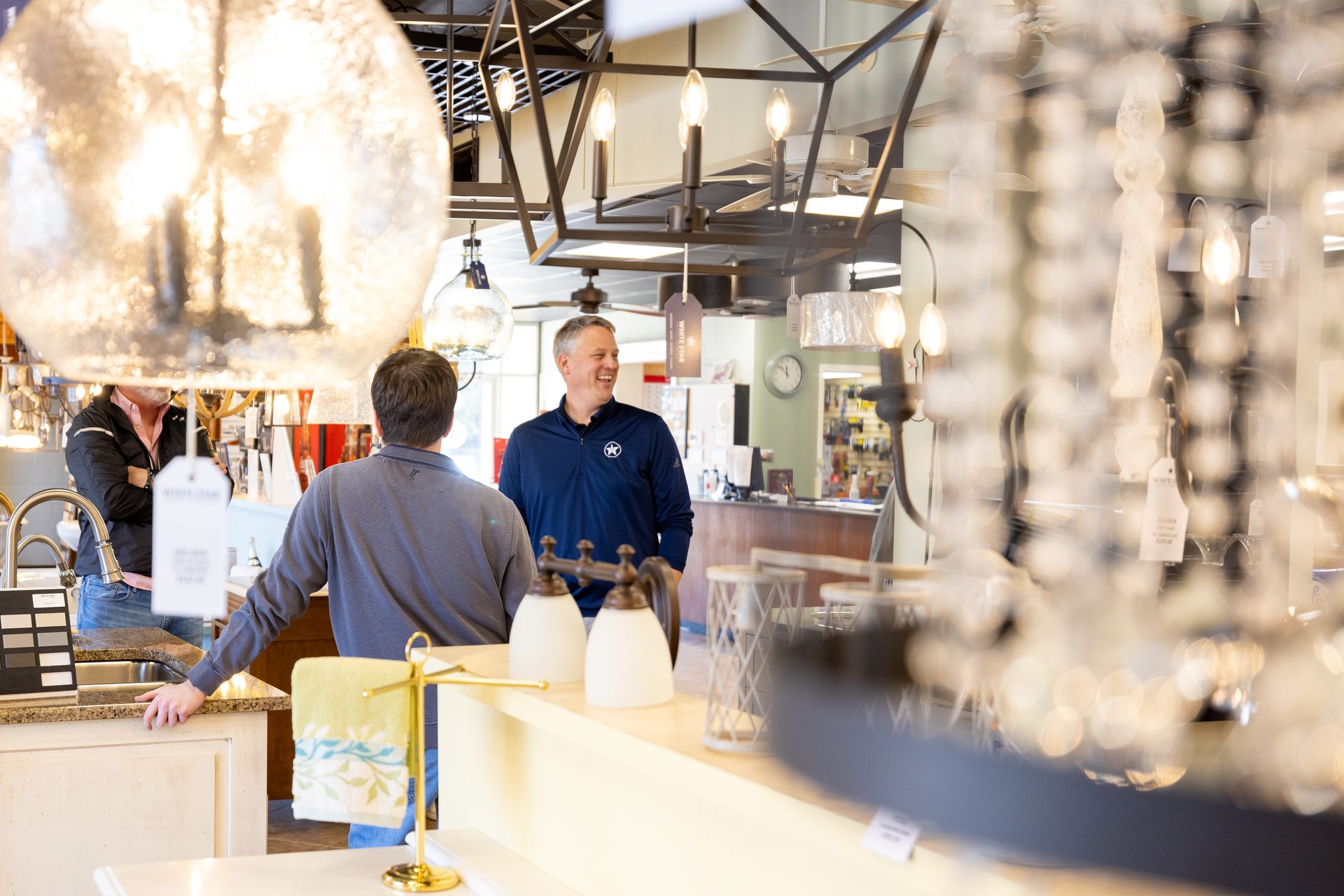
White Star Supply opened its showroom doors in 2021 and now operates with 45 employees and more than 20,000 square feet over its two showroom locations. Photo courtesy of White Star Supply.
From browsing to guided buying
One of the most noticeable changes in the residential bath and kitchen market is how consumers are using showrooms.
“We’ve seen a shift away from DIY-driven sales toward a stronger demand for guided showroom experiences led by our knowledgeable teams,” says Ronda Rindy, Showroom Manager of Gerhards Kitchen & Bath by First Supply. “Showrooms are being used more intentionally as a place to compare finishes, understand functionality, and make confident, informed selections the first time.”
Product availability has reinforced that behavior. According to Amanda Kunst, also with Gerhards Kitchen & Bath, protecting project timelines has become central to the sales conversation.
“We’ve placed a big emphasis on guiding selections toward products stocked in our distribution center,” Kunst says. “At the same time, we’ve narrowed our focus on core vendors and strengthened those relationships to ensure reliability, consistency, and long-term support.”
At Mountain Supply, online pricing transparency has been a major catalyst for change.
“Online pricing isn’t going away, and in some cases we’re competing against our own vendors’ websites,” says Chrystal Bolenbaugh, showroom manager at Mountain Supply. “Because of that, we’ve really ramped up our displays and training around lines that offer price protection and aren’t easily shopped online.”
Mountain Supply has also doubled down on the in-showroom experience itself.
“If customers are going to come in, we want it to feel worth their time . We want them to be comfortable, have fun, and to be genuinely helpful,” Bolenbaugh adds. “Great customer service has become our biggest differentiator.”
At WhiteStar Supply, the response has extended beyond the showroom walls.
“We’ve significantly expanded our outside showroom sales efforts,” says Brad Shanks, showroom manager at WhiteStar Supply. “Relying on designers and contractors to simply send homeowners into the showroom is no longer enough. Today, we have to meet customers where they are — often in their offices or in the home.”

Photo courtesy of WhiteStar Supply
Confidence is the new margin protection
Margin pressure remains one of the defining challenges for showroom operations, but how it is addressed often determines success.
“Where showrooms are making margin right now — and where they’re losing it — comes down to confidence,” says Jeff MacDowell, executive director of LPG. “The showrooms protecting margin are the ones selling what they display and selling it with authority.”
MacDowell says many showrooms unintentionally undermine themselves by acting as order takers.
“A customer asks for a specific sink, and instead of confidently selling what’s already on display, the salesperson tries to source it,” he says. “The showroom becomes a procurement service, not a destination — and margin disappears.”
Beall says buying group strategy increasingly supports that discipline. “Independent showrooms can’t win by carrying everything,” he explains. “They win by carrying the right things, supported by strong vendor programs, exclusivity where it makes sense, and services that increase profitability rather than complexity.”
That perspective resonates with showroom operators. At Mountain Supply, Bolenbaugh says certain categories have become especially difficult to sell profitably.
“National brand products that are also sold directly online are the hardest,” she says. “That level of price transparency makes it challenging to maintain healthy margins.”
As a result, Mountain Supply tracks gross profit dollars per salesperson as its most important metric. “It gives us the clearest picture of sales effectiveness and margin discipline,” Bolenbaugh says.
At Gerhards, metrics focus more heavily on behavior. “Follow-up and close rates are both metrics we watch closely,” says Christine Fish, Gerhards Kitchen & Bath by First Supply. “Following up helps our designers become trusted advisors, and reviewing close rates helps guide their approach if they’re not hitting targets.”
WhiteStar Supply continues to prioritize gross profit, but Shanks says context matters. “We also monitor total sales, open sales, and transaction count,” he says. “We’re always looking for better ways to analyze showroom performance and understand what’s really driving profitability.”
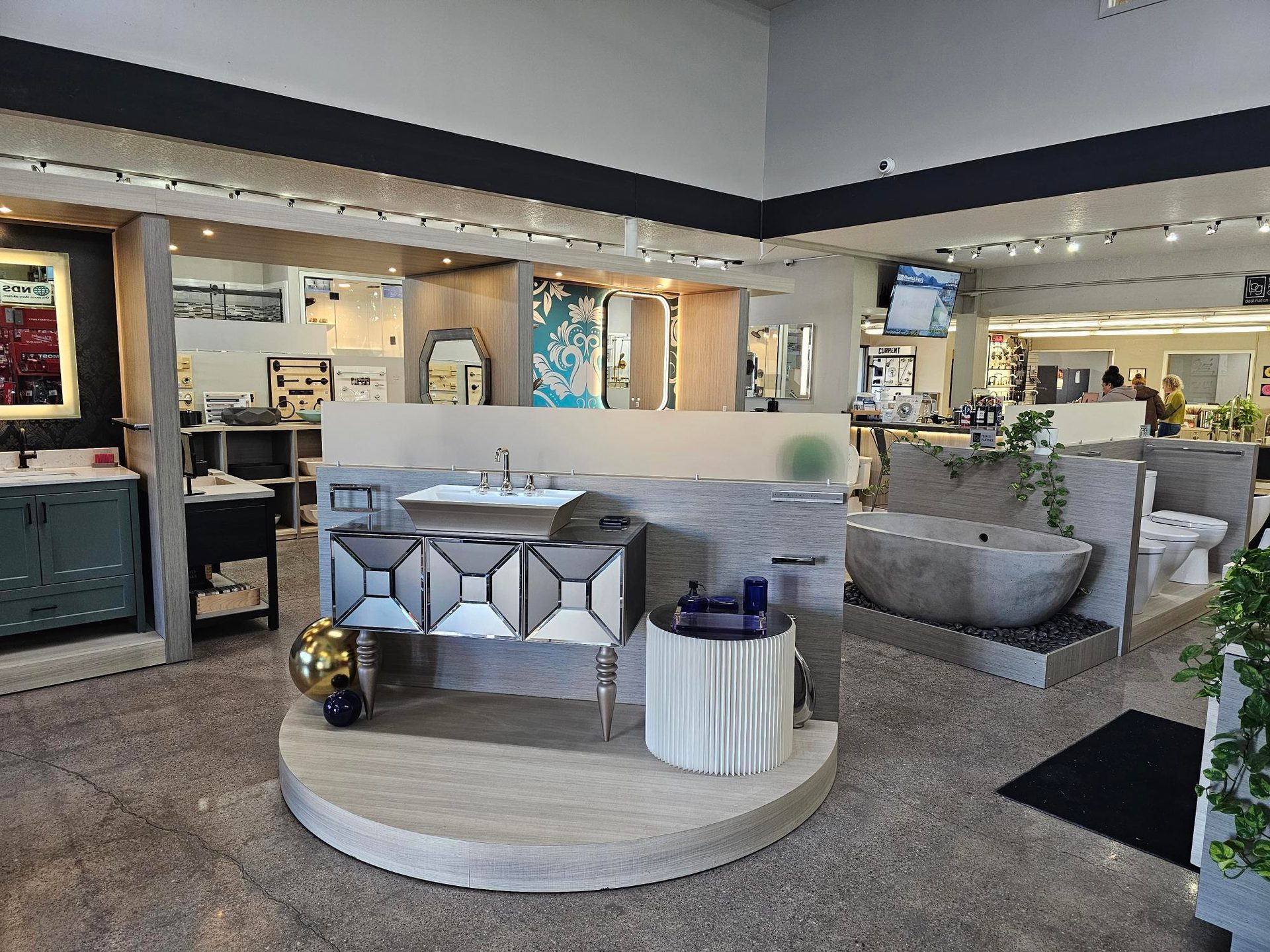
Mountain Supply Co is a Montana based, locally owned and operated Showroom. Photo courtesy of Mountain Supply
Who really controls the sale?
The balance of power between homeowners, designers, plumbers, and builders continues to evolve, and it varies by market.
“In our market, the plumber still has a strong influence on the sale,” Bolenbaugh says. “Plumbers are hard to get on schedule, so homeowners are motivated to choose products their plumber is comfortable installing and can get quickly.”
At Gerhards, that dynamic is familiar. “Many of our markets still have the plumber controlling the sale, with the homeowner and designer heavily involved in selections,” says Kunst. “Knowing who controls the sale helps us adjust how we follow up and close.”
WhiteStar Supply sees a more layered structure. “General contractors and designers typically influence where the homeowner does business,” Shanks says. “Homeowners, often guided by the designer, drive the final selection, while plumbers still have strong preferences on certain categories.”
MacDowell says the strongest showrooms don’t wait for someone else to lead. “The best showrooms own the role of project quarterback,” he says. “They bring clarity, confidence, and coordination to a process that can otherwise feel fragmented.”
Selling systems, not just fixtures
As products become more sophisticated, plumbing-specific knowledge gaps can quietly erode showroom performance. That’s why training remains a priority for AD, Beall says. “Showroom-specific education is critical. It's not just about product knowledge, but helping sales teams confidently upsell and guide customers toward better solutions,” he says. “When teams believe in what they’re selling and understand how it works together, it changes the entire customer experience.”
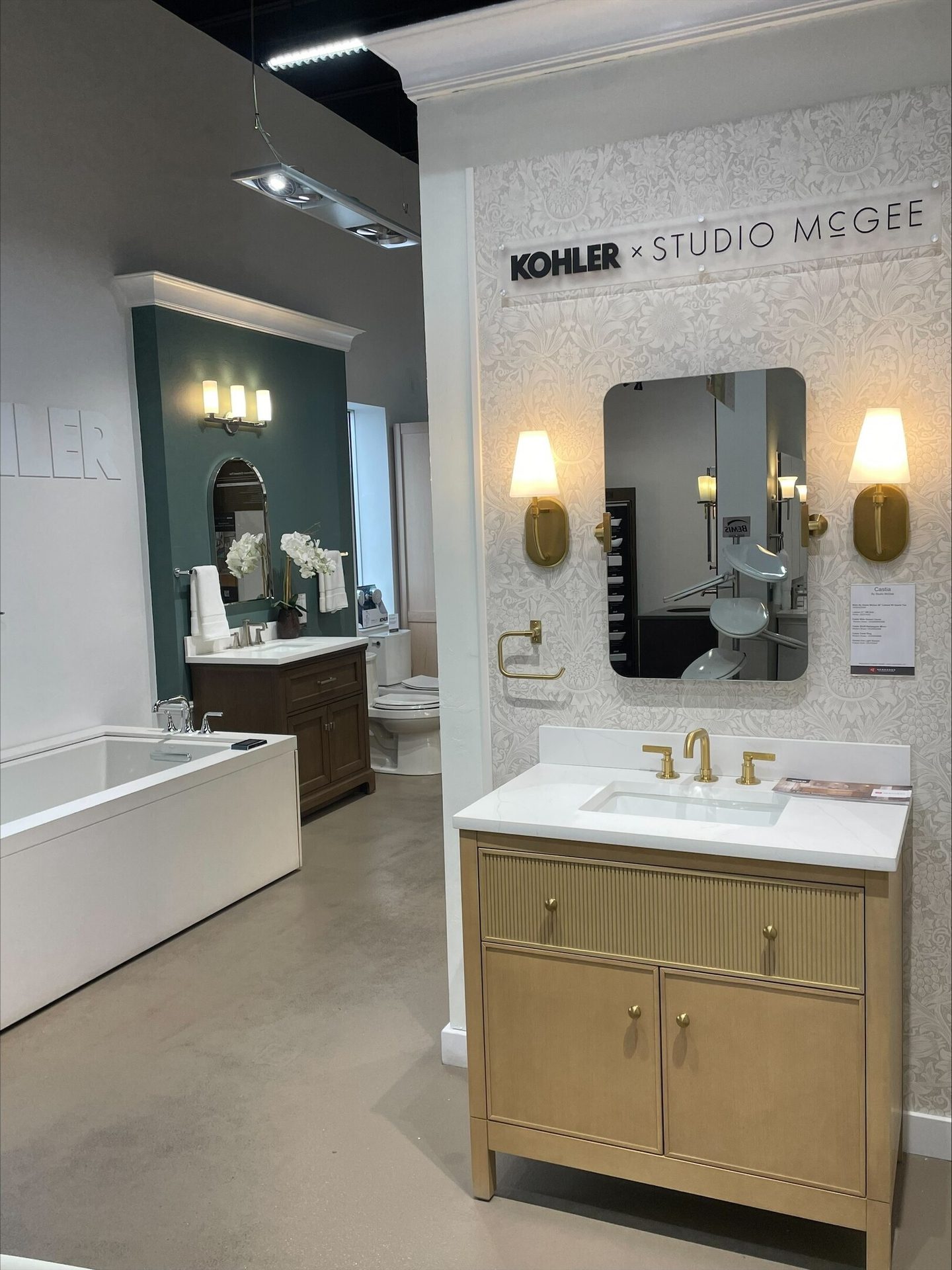
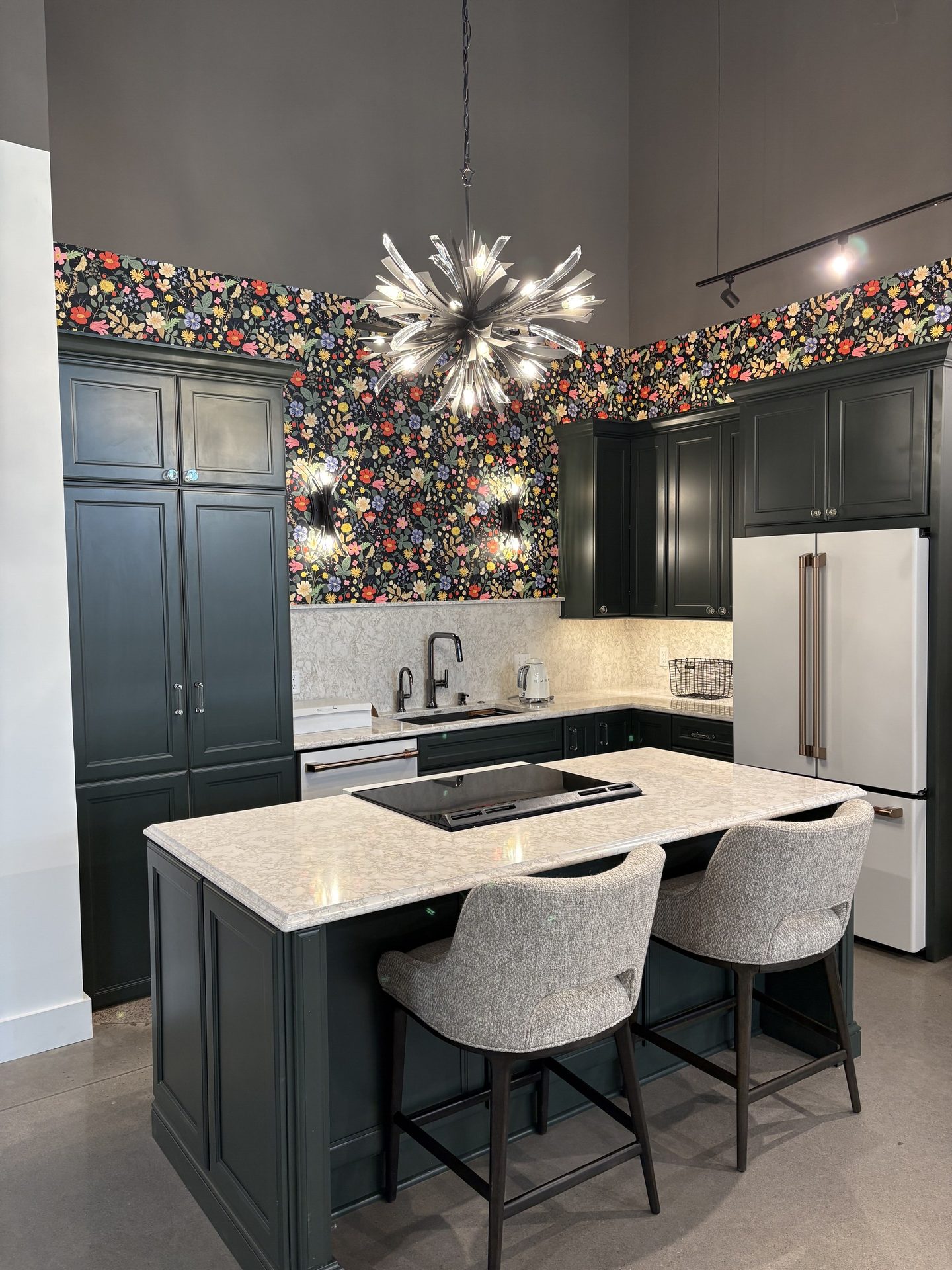
Founded by visionary Gary Poehling, who pioneered one of the nation’s first dedicated showrooms, Gerhard's Kitchen & Bath Store by First Supply serves customers through its 13 locations throughout the Midwest. Photos courtesy of Gerhard's.
Gerhard’s showroom staff emphasizes the importance of building strong, trusted relationships with plumbing contractors.
“This is where expert advice really makes a difference,” says Christine Fish. “Having strong relationships and open communication with plumbers helps us navigate limitations before selections are made and avoid issues down the road.”
Mountain Supply often encounters similar challenges when customers bring inspiration from social media.
“We focus on education without overwhelming the customer,” Bolenbaugh says. “By explaining why something won’t work and offering alternatives that preserve the look, we’re usually able to save the sale.”
WhiteStar’s training emphasis helps prevent conflicts altogether. “Our team understands how valve design, site conditions, and system limitations impact performance,” Shanks says. “That allows us to guide the conversation proactively and avoid surprises.”
MacDowell believes system-level understanding is one of the most underutilized differentiators in showrooms today.
“Selling the fixture without addressing what it needs to work properly creates problems,” he says. “Selling the complete solution protects margin and trust.”
Merchandising smarter, not bigger
Showroom floor space is no longer about showing more — it’s about showing better. At Gerhards, rethinking vertical space has paid dividends.
“We’ve incorporated lighting into our showrooms traditionally dedicated to plumbing,” Rindy says. “It allows us to create more coordinated selections and better utilize the footprint.”
Mountain Supply sees strong returns from clarity. “The displays that convert best are the ones that tell a clear story and make decisions easier,” Bolenbaugh says.
At WhiteStar, working displays play a major role. “Our Kohler and Rohl displays perform extremely well,” Shanks says. “Fully functioning fixtures — including smart toilets — are powerful selling tools.”
MacDowell cautions that many showrooms remain over-displayed in faucets while under-leveraging hardware. “Success isn’t about showing more,” he says. “It’s about showing smarter.”

Photo courtesy of WhiteStar Supply
Buying group support in a disciplined market
For buying groups, the challenge is helping independent showrooms remain differentiated and profitable in an increasingly transparent environment.
“Our goal is to help members stay ahead and maintain a competitive edge,” Beall says. “That includes best-in-class supplier partnerships, showroom-specific training, leadership development, and programs that drive growth and profitability.”
Education, Beall notes, remains central, especially practical training that improves showroom performance.
MacDowell agrees. “Independent showrooms still have a powerful advantage,” he says. “But only if they stay focused, intentional, and disciplined.”
Beyond day-to-day selling, Beall says leadership development is becoming just as critical. “We’re focused on preparing the next generation of independent distributor leaders,” he says. “Sustainable success isn’t just about today’s showroom performance — it’s about building the competencies and confidence that will carry these businesses forward.”
As the residential bath and kitchen market continues to normalize, expectations for showroom performance are rising.
The future belongs to showrooms that lead with confidence, sell systems instead of SKUs, and deliver experiences that cannot be replicated online. For plumbing distributors willing to embrace that role, the showroom remains not just relevant but indispensable.
Beall notes that digital tools are becoming unavoidable, but not at the expense of human expertise. “We’re helping members leverage eCommerce and technology to win in an evolving digital world,” he says, “while keeping the showroom’s role rooted in trust, expertise, and accountability.”
ABOUT THE AUTHOR: