February 2026


feature
Distribution strategies for commercial water conservation
How advanced plumbing systems are reshaping inventory, training, and risk for commercial wholesalers.
By Natalie Forster
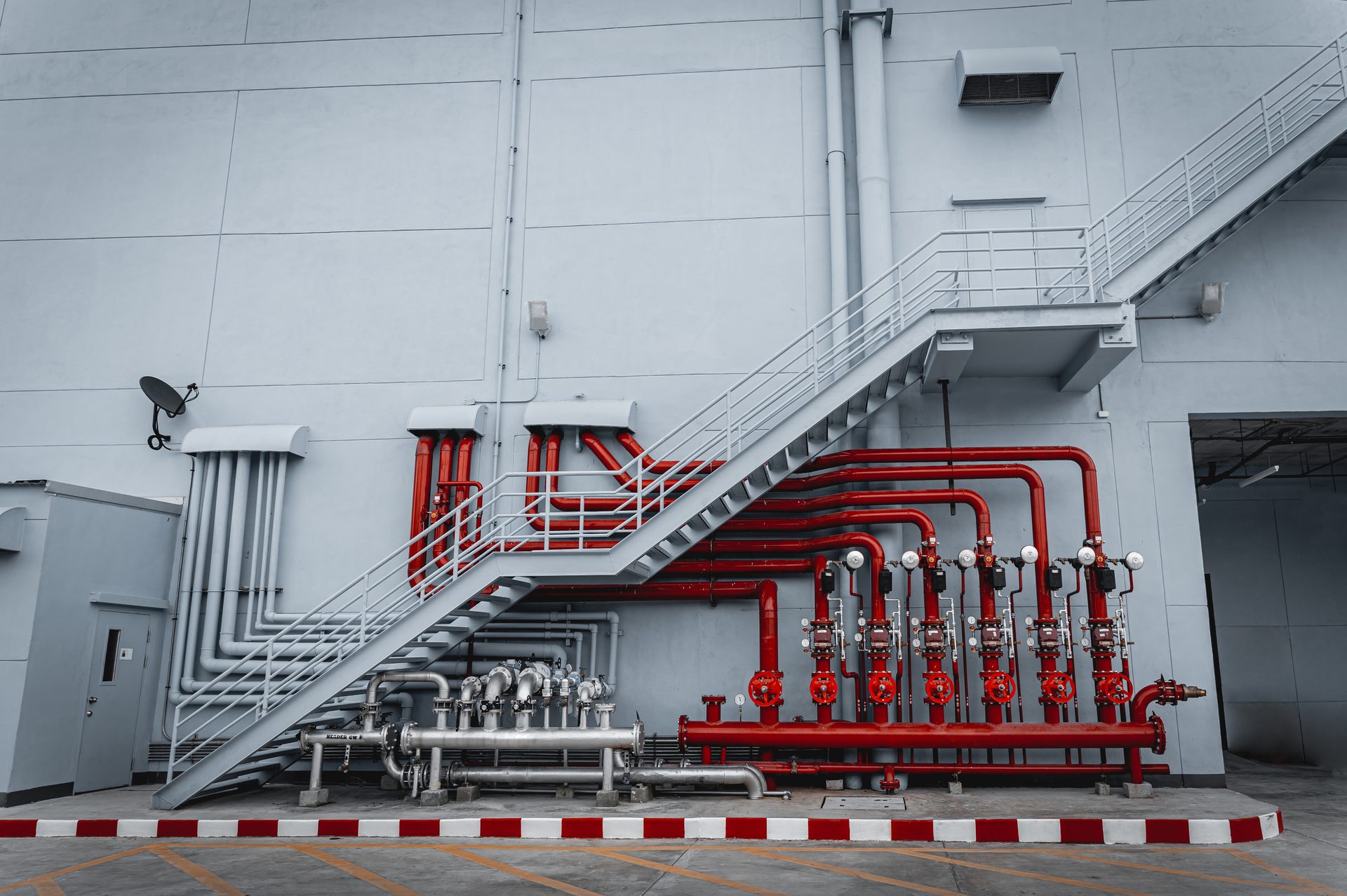
romaset / iStock / Getty Images Plus
Water conservation in commercial and multifamily buildings has long been framed as an engineering or ownership concern — driven by codes, fixture flow rates, and sustainability targets. But as water costs rise, infrastructure ages, and building systems become more complex, conservation is no longer just about using less water. It is increasingly about system performance, risk reduction, and operational intelligence, and that shift is pulling plumbing distributors directly into the conversation.
According to the U.S. Environmental Protection Agency, leaks in nonresidential buildings waste billions of gallons of water annually, with a single undetected leak capable of costing thousands of dollars in damage and lost water over time. Multifamily buildings, in particular, face outsized exposure due to dense plumbing networks, aging infrastructure, and high occupant turnover. As a result, building owners are no longer satisfied with basic “low-flow” solutions alone; they are looking for measurable savings, early warning systems, and long-term reliability.
That demand is reshaping how commercial and multifamily plumbing systems are designed, specified, and supported, and it is placing plumbing distributors at the center of advanced conservation strategies.
Moving beyond low-flow
Traditional conservation efforts focused primarily on reducing flow at fixtures. While those strategies remain important, the market is clearly moving beyond them. Today’s advanced conservation systems rely on real-time data, sensors, and connected components to identify inefficiencies before they become costly failures.
“Watts is taking water conservation beyond low-flow by making traditional mechanical products smarter and more connected,” says Vasanth Gnanadoss, product management leader at Watts Water Technologies. By integrating sensors into strainers, backflow preventers, and leak detection systems, these products collect real-time data on flow, pressure, and system performance. “This visibility enables building teams to identify inefficiencies and leaks early, avoid reduced flow or downtime, and better understand where water usage is occurring so they can target reductions effectively,” Gnanadoss explains.
That same shift toward smarter, more nuanced fixture design is also reshaping how manufacturers think about user experience alongside conservation. “At Sloan, we aim to use water as efficiently as possible while still improving the customer experience,” says Morgan Kish, Director of Product Management at Sloan. “One example is our Hybrid Urinals, which introduce a small amount of water every 72 hours behind the fixture. It’s invisible to users, but it improves cleaning and reduces odors, while still delivering a waterfree urinal experience.”
From the distributor’s perspective, demand for these solutions is already evident — particularly where building owners are looking for fast payback.
“In commercial and multifamily, the biggest demand is still high-efficiency restroom products,” says Eric Hartel of Edwards Platt & Deely. “Low-flow sensor faucets and aerators, high-efficiency flush valves and toilets, and low-water urinals are still the easy wins, especially on renovation projects where owners want quick payback.”
But Hartel notes that interest doesn’t stop at fixtures. “After that, it’s pressure control and monitoring. We’re seeing more jobs adding PRVs, better pressure management, submeters, and leak detection. Leak defense monitoring has been a big one — people want to catch running fixtures and hidden leaks early before it turns into a big bill or a damage issue.”
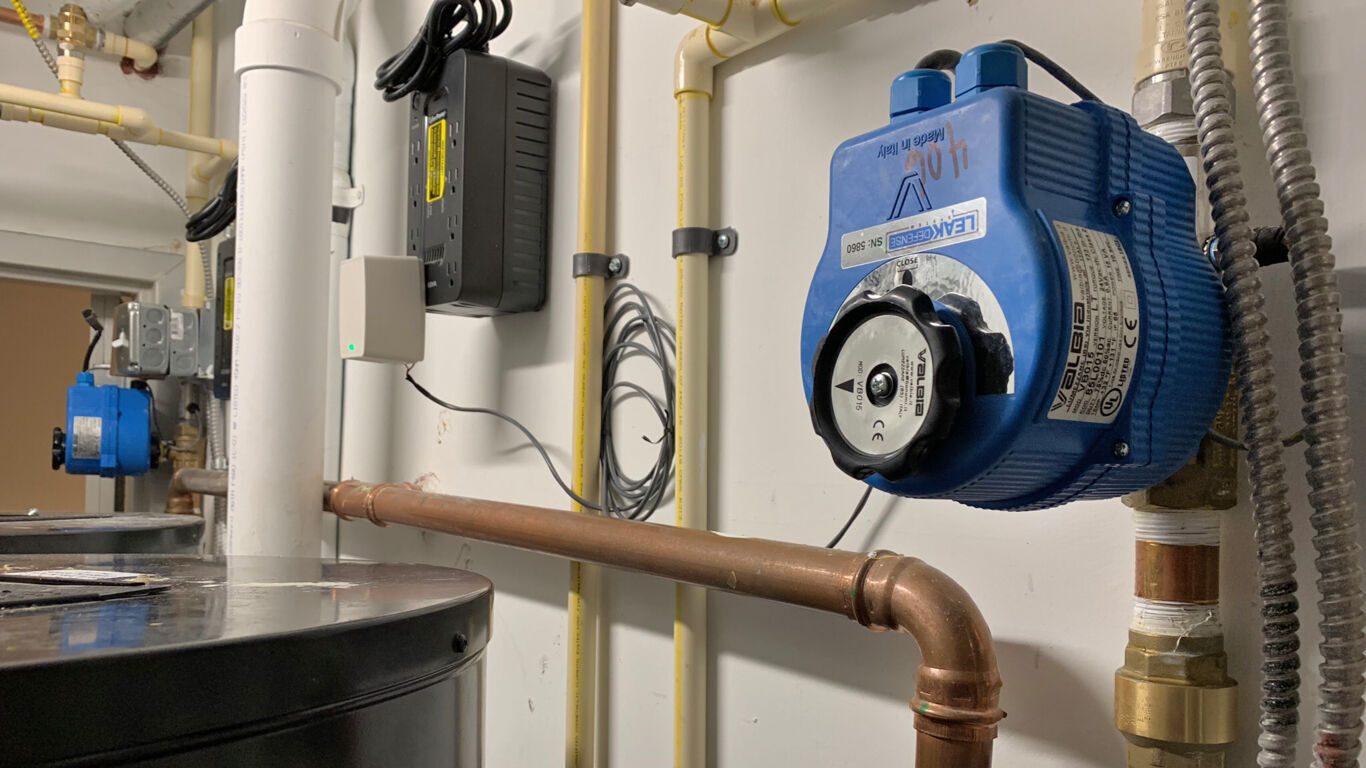
Watts’ connected products use sensors to detect reduced flow or leaks and trigger service alerts or automatic shutoff when needed. Image courtesy of Watts
Digital tools and leak detection change the risk equation
As conservation strategies evolve, digital tools are becoming central to both how buildings manage water and how distributors support those systems. Connected products now allow facilities teams to shift from reactive maintenance to proactive system management.
“Digital technology is transforming buildings by enabling teams to anticipate and prevent problems instead of reacting to them,” Gnanadoss says. Watts’ connected products use sensors to detect reduced flow or leaks and trigger service alerts or automatic shutoff when needed. “The true value of smart technology lies in its ability to prevent issues before they cause downtime or damage.”
Sensor technology is also being applied directly at the point of use to drive savings without changing occupant behavior. “One very popular application is sensor-operated dual-flush flushometers,” Kish says. “They intelligently determine the appropriate flush based on how long a user is in range. That allows for considerable water savings without requiring the bathroom user to do anything differently.”
Hartel points out that in multifamily applications, domestic hot water systems are a growing focus. “We’re seeing more interest in demand recirculation and better mixing and balancing so tenants aren’t running water forever waiting for it to get hot. That’s conservation, but it’s also about comfort and system performance.”
For wholesalers, these systems require more than just stocking product. They demand education, coordination, and confidence at the counter and inside sales desk — especially when smart features go unused.
Gnanadoss notes that many connected products are now “connectivity-ready,” but features can remain dormant if installers or owners are unaware of how to activate them. “Increasing education and awareness at installation is key to ensuring that connected systems deliver their full conservation and protection benefits.”
Kish adds that connected platforms also require operational buy-in. “Adopting IoT systems means building the infrastructure to deliver alerts, getting teams comfortable receiving data on their devices, and then changing maintenance behaviors,” he says. “Instead of replacing all batteries on a schedule, teams can replace only what’s needed based on real usage data.”
Reuse systems and smarter distribution layouts
Beyond monitoring and leak detection, reuse systems are becoming a more common part of commercial and multifamily design, particularly in regions facing water stress or rising utility costs.
“Engineers are increasingly focused on reuse and digital control strategies,” Gnanadoss says. Watts’ RainCycle™ system enables rainwater collection and reuse for greywater applications, helping facilities lower demand for potable water. On the distribution side, IoT-enabled digital mixing valves such as the POWERS IntelliStation 2 are delivering measurable water and energy savings through tighter temperature control and reduced standby losses.
Reclaimed water applications are also gaining traction in restroom systems. “We’re continuing to see growth in projects that use reclaimed water to flush toilets and serve other non-potable applications,” Kish says. “It’s critical to choose products designed for reclaimed water, because the makeup of that water can increase wear on traditional materials.”
These systems introduce new complexity for distributors, especially when it comes to compatibility, labeling, and code compliance, an area where hesitation is common.
“Application budgeting is a big hurdle,” says Adam Haussman of Delco Sales. “In many cases, the budget for advanced conservation systems increases 100% because the budget on previous projects was zero. Contractors and owners struggle to measure total cost of ownership because they don’t have experience with these systems.”
Certification requirements add another layer of complexity. “Many jurisdictions require third-party certification,” Haussman explains. “Advanced conservation systems combine pumps, control panels, storage tanks, and valves, and they rarely feature a single stand-alone certification. If local authorities see that as a barrier, owners may avoid these systems altogether.”
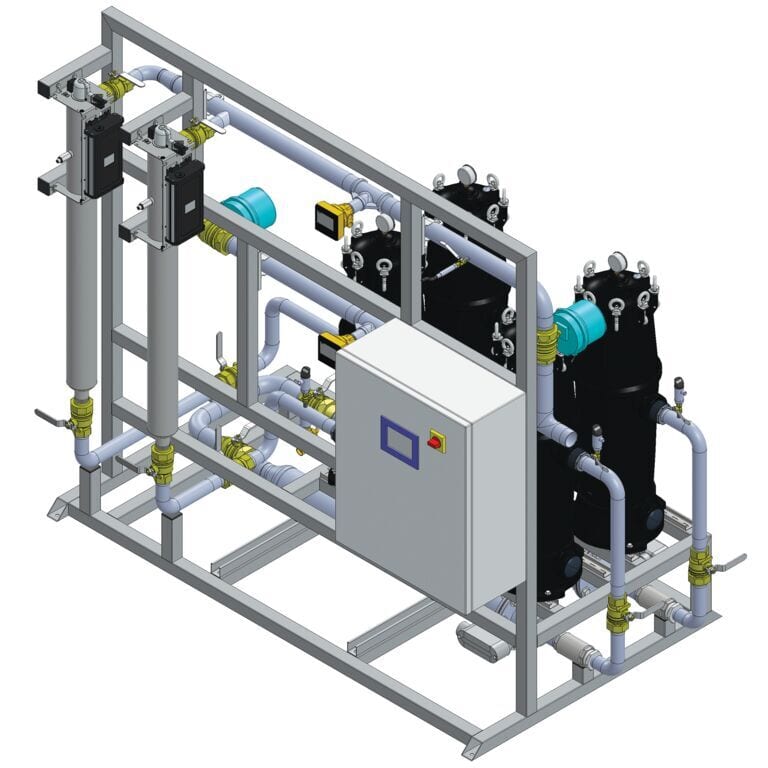
Reuse systems are becoming a more common part of commercial and multifamily design, particularly in regions facing water stress or rising utility costs. Image courtesy of Watts
Water quality and chemistry drive inventory decisions
Water conservation does not exist in a vacuum. Local water chemistry, source quality, and regulatory environments all influence which products perform well and which fail prematurely.
“Local water chemistry plays a major role in stocking decisions,” says Claire Connors of Mid-Continent. “Factors like water source, common contaminants such as lead, PFAS, or iron, water hardness, and local regulations all matter.”
Connors notes that water hardness alone can vary dramatically within a single region. “Lake Michigan water averages around seven to eight grains per gallon, but surrounding groundwater sources can be significantly harder; 15 to 30 grains per gallon in some suburban areas. That changes what systems make sense.”
She adds that replacement media and consumables are often overlooked. “Many water quality systems require ongoing maintenance. Filters need to be replaced. Stocking those replacements is just as important as stocking the system itself.”
Filtration standards are also influencing product development and specification. “Some of the most impactful code changes we’re seeing relate to water filtration, similar to the Michigan Filter First standard,” Kish says. “These requirements ensure public facilities provide filtered water and sometimes specify which contaminants, including PFAS, must be removed. Providing clean drinking water was a top priority when we designed our bottle fillers and water coolers.”
For distributors, this knowledge positions them as critical translators between municipal water reports, manufacturer specifications, and contractor decisions — particularly in commercial and multifamily markets where misapplication can carry serious consequences.
Where misapplication risk is highest
As advanced conservation systems become more common, the risk of misapplication grows, especially when substitutions occur late in a project.
“Communication is the biggest risk,” Haussman says. “Many facilities don’t allow WiFi communication due to IT concerns over unauthorized access. Those issues need to be addressed during design, not after installation.”
Treatment levels present another challenge. “Conservation systems often reuse water for non-potable applications like toilets or irrigation,” Haussman explains. “Different applications require different levels of treatment. A substitution has to consider public health requirements, or you risk serious problems.”
These realities underscore why distributors must understand not just what a product does, but where and how it can be applied safely.
Adoption drivers and what’s holding the market back
Building owners are increasingly motivated by LEED certification, ESG commitments, and long-term cost savings. However, Gnanadoss points out that awareness and upfront cost remain obstacles. “Owners who have experienced a costly leak or equipment failure are often the fastest to adopt prevention technologies because they understand the true cost of inaction.”
From a technology standpoint, Kish says adoption hinges on organizational readiness. “Advanced systems require openness to new workflows and support from manufacturers,” he says. “At Sloan, we work with customers from system layout through training and data analysis, helping them understand how to improve uptime and user experience over time.”
From the distributor side, education is often the missing link. Without clear explanations of ROI, activation requirements, and compatibility, advanced systems can be perceived as risky rather than protective.
Advanced conservation techniques are reshaping commercial and multifamily plumbing — and with them, the role of the plumbing distributor. These systems influence inventory strategy, training priorities, and risk exposure, making conservation a core distribution issue rather than a peripheral one.
Distributors who understand water quality, system performance, and digital monitoring are better positioned to reduce returns, support contractors, and deliver long-term value. As conservation moves beyond low-flow into fully connected systems, wholesalers will increasingly define whether these technologies succeed in the field — or fall short of their promise.
ABOUT THE AUTHOR: