February 2026


Emerging Leaders
By Bryce Moore
Building credibility: The foundation of emerging leadership
How emerging leaders can earn credibility in a relationship-driven plumbing distribution industry.

Igor Suka / E+ / Getty Images
Most emerging leaders don’t lack motivation. They want to contribute, grow, and make an impact early in their careers. The challenge is often understanding what senior leaders are actually looking for before they grant more responsibility.
In plumbing distribution, credibility matters more than ambition. Senior leaders prioritize those who can be trusted to execute, communicate clearly, and make sound decisions under pressure. For emerging leaders, learning how credibility is built—and lost—is one of the most important steps toward long-term leadership.
Start with your direct leader
For those looking to build a reputation within their organization, it starts with their direct leader. Understanding their priorities, pressures, and communication style is essential. Learn what they are accountable for. Learn how they prefer to receive information. Learn where their time and attention are stretched.
With most leaders, reliability beats brilliance. Credibility is built by meeting deadlines without reminders, closing loops proactively, and delivering on commitments. As Charlie Munger said, “The best way to get what you want is to deserve it.” Ask for more work, then execute well. Performance excellence will be noticed by the internal and external customers you deal with, opening doors for future opportunities.
Broaden your perspective
Another key component of credibility is perspective. Senior leaders must look out for the well-being of the entire company, not just a singular department. To align with them, look for opportunities to broaden your view and sharpen your judgment.
Perhaps there is a cross-functional project team you can participate in. I’ve personally found that even acting as the scribe for meetings can be valuable—it is a front-row seat to how decisions are made. If a specific department interests you, ask to shadow someone for a day. Building your perspective also looks like upskilling through formal education, such as a college degree or ASA’s MDM program. These programs provide the necessary frameworks to tackle complex problems.
Learn from the industry
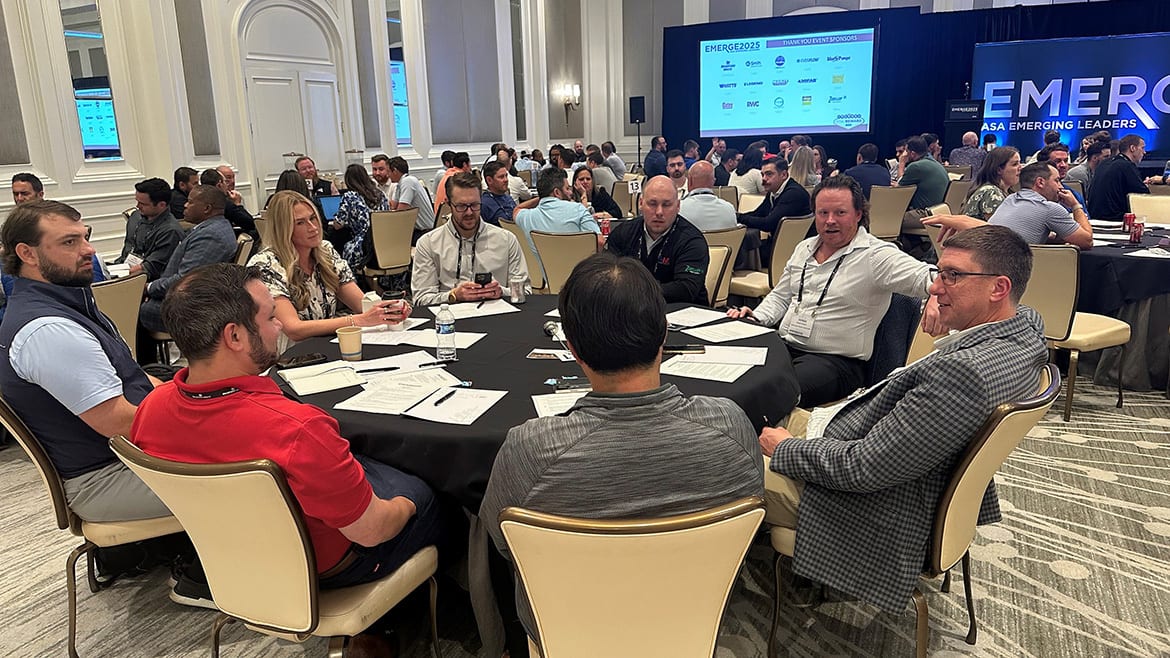
It is far better to learn from the mistakes of others than to make them all yourself. Networking events, like the Emerging Leaders conference, provide roundtables where best practices are shared. Attendees connect with industry peers across the nation to share challenges, celebrate wins, and experience the tight-knit nature of the PHCP/PVF industry.
Credibility and reputation are key in an industry where over 50% of the workforce has more than 15 years of tenure. These veterans have seen it all; connecting with and learning from them is a fantastic way to accelerate your own growth.
Senior leaders prioritize those who can be trusted to execute, communicate clearly, and make sound decisions under pressure.
The power of positivity
Finally, your attitude is the lens through which leadership views your potential. Positivity in leadership isn't about blind optimism; it’s about framing. Credible leaders view problems as opportunities to improve a process rather than reasons to complain. When issues arise, tackle them head-on without whining. Bringing a solution alongside a problem shows maturity; bringing only the problem shows a lack of ownership. Ultimately, you will be most successful when you cultivate genuine gratitude—for the work you have, the stability of the company you are at, and the essential nature of the industry we serve.
Conclusion
Building credibility is not an overnight event; it is the cumulative result of small, consistent actions. It requires pragmatism to meet your direct leader’s needs, curiosity to broaden your perspective, and the discipline to maintain a positive, problem-solving mindset. In an industry as established and relationship-driven as ours, trust is the currency of advancement. By focusing on these fundamentals, you won't just be asking for a seat at the table—you’ll prove you belong there.
ABOUT THE AUTHOR: