
January 2026


feature
The water heater market recalibrates
As residential demand normalizes, commercial and multifamily applications drive a more selective and performance-driven water heater market.
By Kristen Bayles
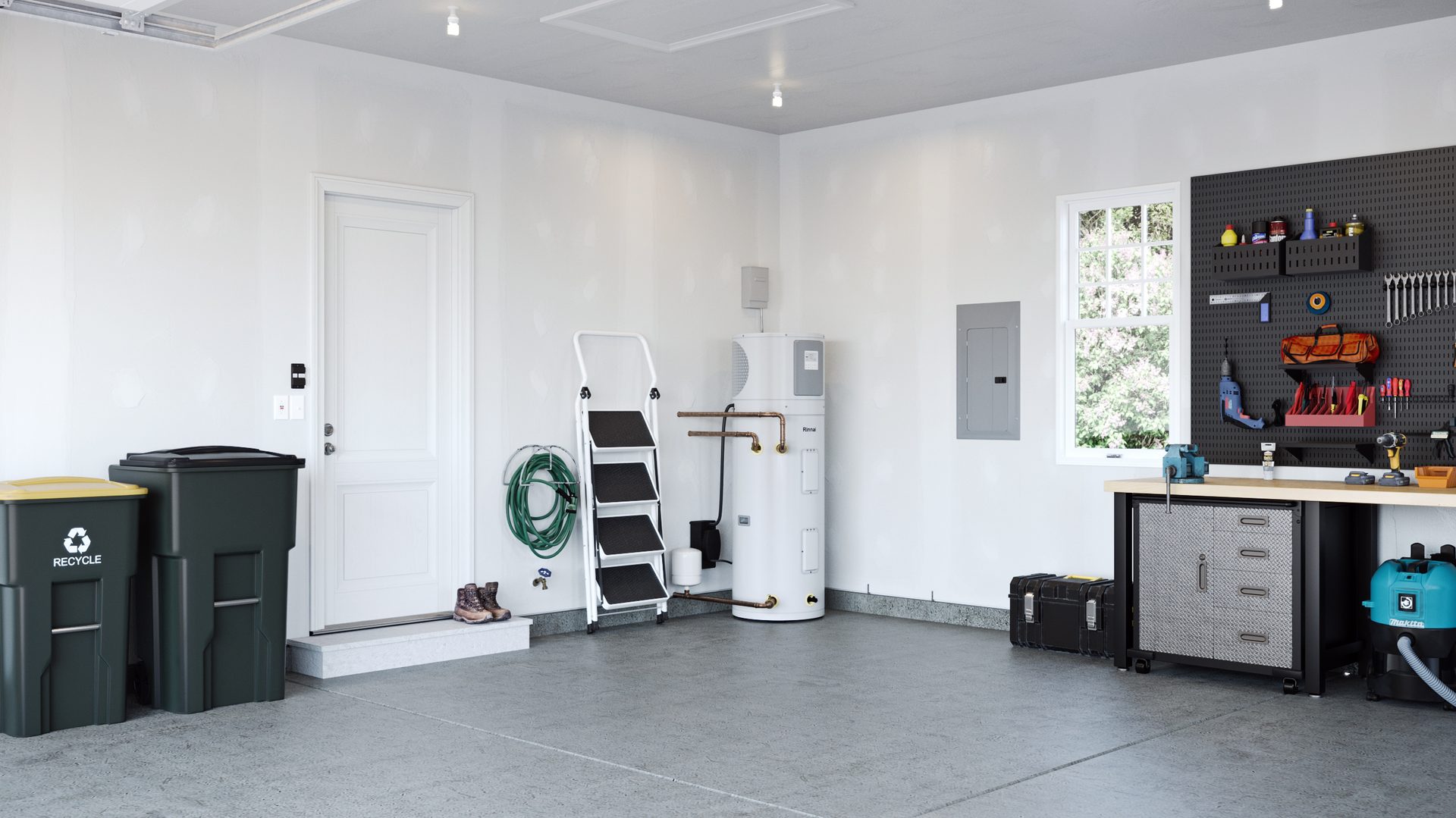
Water heater demand heading into 2026 is defined less by volume and more by performance, reliability and system fit. All courtesy of Rinnai
As the water heater market moves into 2026, growth is steady, but the way demand shows up is slightly more nuanced than it was just a few years ago. The post-pandemic surge in residential replacement has largely normalized, leaving a market shaped less by volume spikes and more by where systems are being specified, how they are being used, and what owners expect over the long term.
Across manufacturers, the consensus is clear: commercial and multifamily applications are carrying the market, while residential demand is becoming more selective. Rather than chasing the latest technology for its own sake, buyers are asking more pointed questions about reliability, efficiency, operating cost and regulatory alignment. Performance expectations are higher, while tolerance for downtime, inefficiency or mismatched systems is lower.
At the same time, the category is entering a period of divergence rather than convergence. Fuel pathways, system architectures and compliance strategies are increasingly shaped by regional policy, building type and usage intensity. Heat pump water heaters, high-efficiency gas systems, hybrids and tankless solutions are all gaining traction: not as universal answers, but as targeted responses to specific applications and market conditions.
Coupled with these demands is a regulatory environment that is actively influencing purchasing decisions ahead of 2026. Upcoming DOE standards and shifting state-level policies are accelerating some near-term buying, all while reshaping longer-term product strategies. For manufacturers, distributors and contractors alike, the market is less about replacement cycles, and more about informed system selections.
I spoke with several experts in the water heater industry to learn more about where the market is heading, and what’s driving those changes.
Consumer demand: steady growth, greater expectations
As the water heater market moves into 2026, demand remains steady — where, how and why systems are being specified? Across manufacturers, one theme is consistent: while residential demand has normalized after the pandemic-era replacement surge, commercial and multifamily segments continue to carry the market.
Rinnai reports year-over-year growth in both residential and commercial water heater sales, with particularly strong activity in high-capacity applications. According to David Federico, senior director of marketing at Rinnai America Corp., demand is being driven less by simple unit replacement, and more by performance expectations tied to reliability, efficiency and total cost of ownership.
“Across all verticals, decision-makers are prioritizing total cost of ownership, system reliability and energy efficiency,” Federico said, noting that those priorities are shaping purchasing decisions across foodservice, hospitality, healthcare and multifamily projects.
This aligns with what other leading manufacturers are seeing. A. O. Smith’s Portfolio Director, Matt Baranuk, describes overall demand as holding steady year over year, with “softness” in residential offset by exceptionally strong commercial performance — particularly in states advancing decarbonization initiatives and/or new construction activity. Multifamily, hospitality and education projects are consistently cited as top drivers of unit volume, especially for high-efficiency and large-capacity systems.
Regionally, demand is diverging along policy and construction lines. Baraknuk and Dustin Wiggins, portfolio director of water heaters and tanks at Lochinvar, agree that the West Coast continues to lead adoption of heat pump water heaters, fueled by aggressive state decarbonization efforts and layered rebate programs.
In contrast, demand in the Southeast is being driven largely by commercial growth – particularly in multifamily and hospitality – while residential sales remain relatively flat. The Northeast presents a mixed picture: some states continue to favor gas, while others are accelerating electrification, but nearly all are seeing modest growth tied to aging infrastructure replacement.
Usage intensity and sector demands are shaping where product momentum is strongest, according to Federico. He noted that hospitality operators prioritize consistent hot water delivery during peak usage, while foodservice facilities want reliable volume and temperature control to keep operations moving without interruption. Healthcare facilities — among the most demanding buyers — continue to seek reliability, precise temperature control, energy efficiency and infection control considerations.
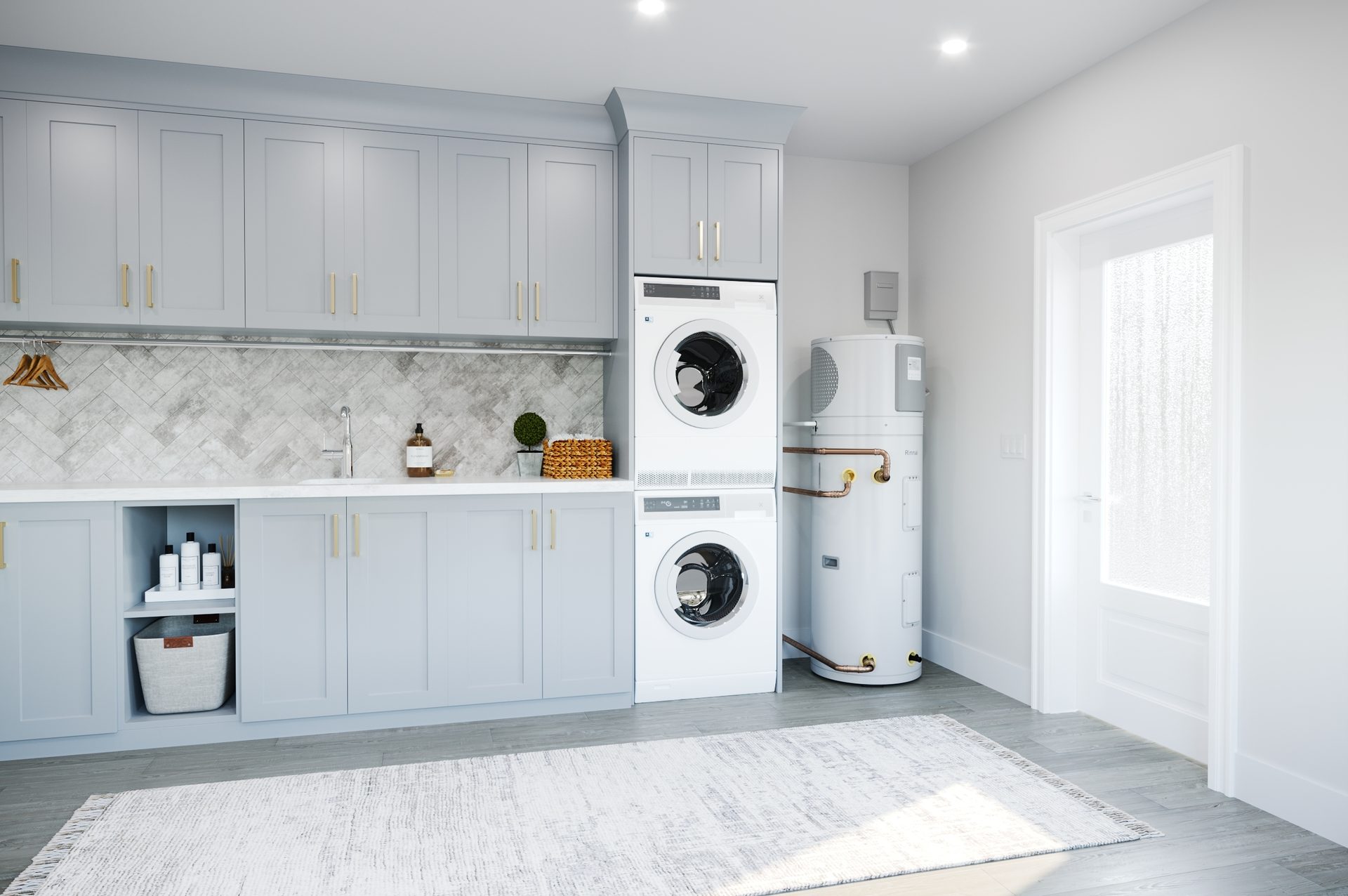
As residential demand normalizes, commercial and multifamily applications drive a more selective and performance-driven water heater market.
Multifamily demand, meanwhile, is increasingly shaped by footprint, operating cost and long-term efficiency. Owners and developers are actively replacing aging centralized systems in urban properties, while new construction projects are more frequently evaluating heat pump water heaters as part of broader sustainability goals.
Wiggins noted that some segments are growing faster than others: “Multifamily and hospitality really stand out right now in terms of growing sectors, and we don’t anticipate this will slow down anytime soon.”
On the residential side, demand is becoming more selective. While unit volumes may not be accelerating at pandemic-era levels, interest in efficient and sustainable solutions is rising in growth markets.
Heat pump water heaters are gaining traction in single-family new builds and retrofits where energy savings, incentives and environmental considerations intersect. At the same time, tankless water heaters continue to convert customers away from traditional tanks, particularly where space constraints and long-term operating costs are key concerns.
Efficiency rises, pathways diverge
As demand steadies, the water heater market entering 2026 is increasingly defined by divergence — not just between residential and commercial applications, but across fuel types, system architectures and compliance strategies. Rather than converging on a single dominant technology, the market is expanding along multiple paths, shaped by regional regulations, building types and owner priorities.
“The water heater category demonstrating the strongest momentum leading into 2026 is commercial and high-efficiency gas water heaters,” said Baranuk. He added that this momentum is being “amplified by the upcoming 2026 DOE regulations, which are driving demand for non-condensing units before they are phased out.”
That near-term activity is creating a surge in certain categories, but it is also accelerating a longer-term shift toward higher efficiency as the baseline. Baranuk noted that “the market is evolving through a predictable sequence: high-efficiency gas is rapidly becoming the standard minimum requirement, paving the way for hybrid solutions.”
At the same time, heat pump water heaters are continuing to gain ground, particularly in commercial and multifamily applications. While adoption remains uneven by region, manufacturers point to sustained investment and improving performance as signs of lasting momentum. Despite some localized changes to incentive funding, Baranuk noted that, “commercial heat pump water heaters (HPWH) remain a core focus as we look toward 2026,” adding that the category is supported by an emerging replacement cycle as earlier installations reach end of life.
Lochinvar is seeing similar dynamics. With final clarity on federal standards, the company expects the commercial market to consolidate around fewer technologies. “Now that we know we are officially moving ahead with these standard changes, the industry has to move quickly to accommodate,” said Wiggins. “Subsequently, the commercial market is shifting its focus almost exclusively to condensing gas water heaters and heat pump water heaters.”
Hybrid systems are also gaining traction, as owners and operators look for flexibility amid regulatory uncertainty. A. O. Smith notes growing interest in systems that blend technologies to balance efficiency and performance. “We are seeing a significant trend toward integrated smart controls and hybrid systems that leverage an electric-plus-heat pump and eventually a gas-plus-heat pump connection to achieve optimal performance,” Baranuk noted.
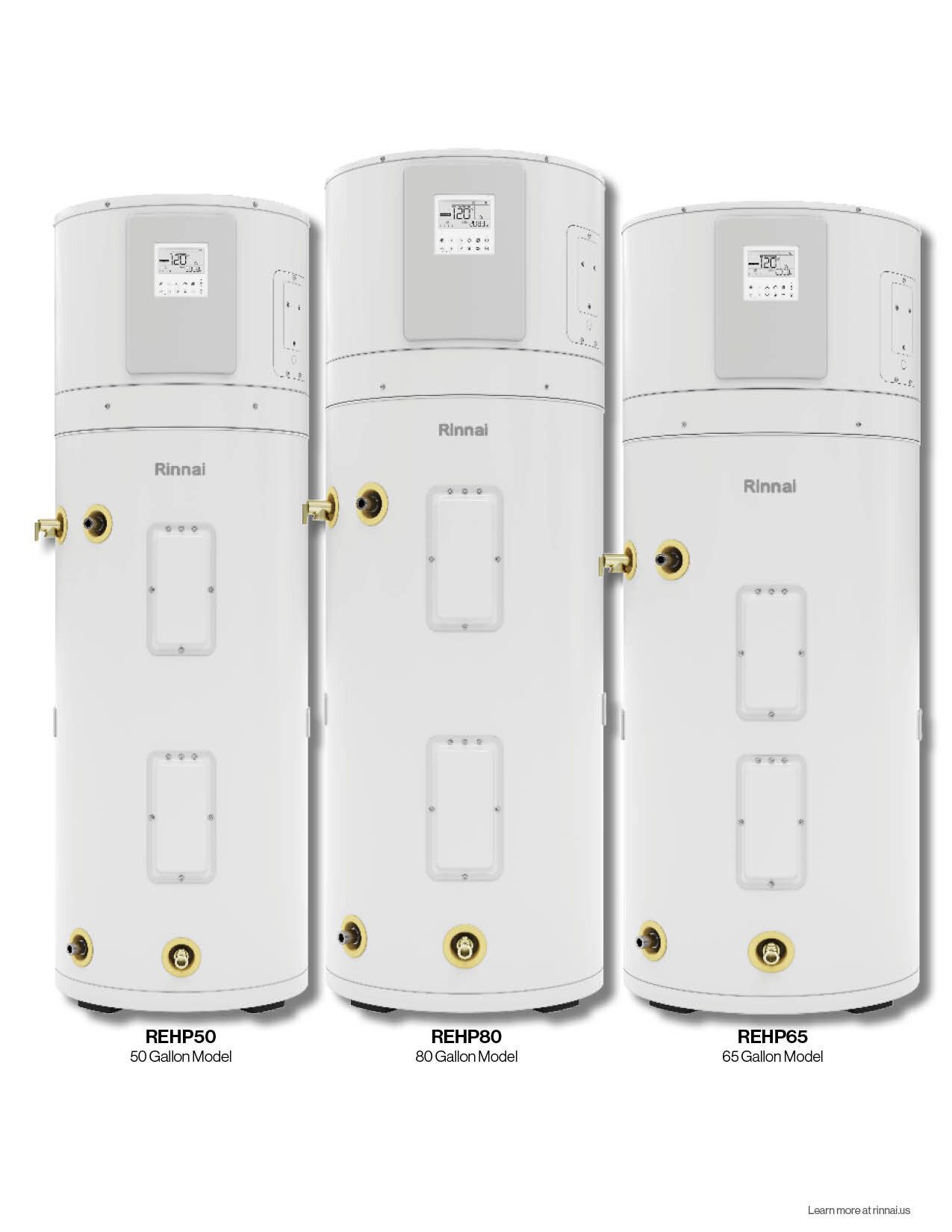
The Rinnai REHP Series 50.65.80 gallon unit.
Tankless systems continue their steady conversion, particularly in residential and light commercial applications. Rinnai reports growth across all major categories, with increasing movement away from traditional tanks. “We continue to see increased adoption and conversion from tank to tankless water heaters,” said Federico. At the same time, he noted “a growing demand for electric in some markets,” which influenced Rinnai’s decision to expand its portfolio.
Fuel diversity, manufacturers emphasize, is becoming more of a strategic necessity rather than a contingency plan. Federico pointed to the importance of offering multiple pathways as markets evolve at different speeds. “We expect some markets to continue to have needs for multiple fuel sources,” he said, “which is a key reason we have launched our line of Electric Heat Pump Water Heaters.”
The result is a market that is less about replacement, and more about system selection. Category momentum is being shaped by how well each solution aligns with efficiency mandates, operating demands and long-term risk management. For contractors and specifiers, the challenge — and opportunity! — lies in navigating those choices as the industry adjusts to a more complex, but more capable, mix of water heating solutions.
Technology and features: from differentiators to expectations
What were once viewed as premium differentiators — connectivity, advanced controls and system intelligence — are quickly becoming baseline expectations, particularly in commercial and multifamily applications.
Manufacturers report that connected products are no longer optional in many segments. At Rinnai, connectivity is now embedded across most new product development. “Connected products continue to gain traction and are incorporated into the vast majority of new product(s) in development,” said Federico, pointing to growing demand for systems that offer visibility, diagnostics and easier long-term management.
A. O. Smith echoes that shift, noting how quickly the market has moved beyond early smart features. “In the last year, connectivity and leak protection have transitioned from desired features to standard expectations in new units,” said Baranuk. As those capabilities are often now expected, manufacturers are pushing further into integrated system intelligence. “Looking ahead to 2026, we are seeing a significant trend toward integrated smart controls and hybrid systems,” he added, particularly those designed to optimize performance across multiple energy inputs.
Advanced controls are also playing a critical role in expanding the viability of heat pump water heaters across climate zones. A. O. Smith and Lochinvar both point to smarter compressors, control logic and learning algorithms as key enablers. Baranuk noted that A. O. Smith has focused on, “smarter compressors that are paired with sophisticated control logic systems that are capable of learning usage patterns,” while also addressing more practical considerations like noise reduction and footprint.
Lochinvar highlights similar progress, particularly in how modern controls adapt systems to varying conditions. “One of the most significant advancements is the integration of advanced controls and sophisticated operating logic,” said Dustin Wiggins. These improvements, he explained, allow heat pump systems to “optimize performance and adapt to varying environmental conditions,” supporting reliable operation regardless of climate.
Hybrid system architectures are emerging as a direct outcome of these control advancements. By combining technologies — such as heat pumps and traditional systems — hybrids allow facilities to balance efficiency with peak-demand performance. “Hybrid systems are rapidly gaining traction in the water heating market,” Wiggins said, citing their ability to “optimize energy use, adapt to varying load demands and maintain reliable operation across diverse climate zones.”
Across manufacturers, the consensus is clear: commercial and multifamily applications are carrying the market, while residential demand is becoming more selective.
In high-capacity commercial environments, redundancy and system-level planning are also becoming more important. Foodservice, hospitality and healthcare operators increasingly expect water heating systems that can maintain uptime during maintenance or unexpected load spikes. While not always visible to end users, these behind-the-scenes features are influencing specification decisions as owners prioritize resilience alongside efficiency.
Taken together, technology adoption in the water heater market is no longer about adding features for their own sake. Connectivity, controls and hybridization are being used to simplify operation, reduce risk and support compliance — all while improving the end-user experience. As 2026 approaches, the most successful products are those that integrate intelligence seamlessly, allowing contractors, owners and facility managers to manage increasingly complex systems with greater confidence and fewer surprises.
What you need to understand now
As technology, regulation and customer expectations converge together, manufacturers agree that success in the 2026 market will depend less on familiarity with a single product category, and more on the ability to navigate an increasingly complex mix of technologies, fuel types and compliance requirements.
A central message from manufacturers? The importance of education.
With major regulatory milestones approaching — including the 2026 DOE standards and NAECA 4 in the residential market — contractors are being asked to install and service systems that behave differently from legacy equipment. “Going into 2026, it is critically important that contractors understand the upcoming DOE and NAECA4 changes,” said Wiggins. Without that understanding, he cautioned, even well-intentioned installations can fall short of performance and efficiency expectations.
At the same time, think in terms of systems rather than standalone units. A. O. Smith points to a broader shift in how water heating solutions are designed and specified. “The industry landscape is undergoing a rapid evolution, prioritizing a unified system approach over disparate, standalone solutions,” said Baranuk. For contractors, that means greater emphasis on load calculations, controls integration and long-term service planning; particularly in commercial and multifamily projects.
With some markets accelerating electrification while others maintain strong demand for gas, contractors must be prepared to support multiple pathways. Rinnai expects that diversity to persist. “We expect some markets to continue to have needs for multiple fuel sources,” said Federico. That reality places contractors at the center of helping owners select solutions that balance efficiency goals with operational reliability.
Technology adoption in the water heater market is no longer about adding features for their own sake. Connectivity, controls and hybridization are being used to simplify operation, reduce risk and support compliance.
Manufacturers also stress that technology adoption will continue to raise the bar for installation quality and commissioning. Advanced controls, connectivity and hybrid systems offer significant benefits, but only when they are properly configured. Contractors who invest in training and leverage manufacturer resources are better positioned to avoid callbacks, improve system performance and strengthen customer trust.
Ultimately, those who stand out in the coming cycle will be those who can translate complexity into confidence — guiding customers through regulatory change, explaining tradeoffs between technologies and ensuring systems perform as intended long after startup.
As the water heater market moves toward 2026, the picture that emerges is one of recalibration, rather than upheaval. Demand remains steady, but expectations are rising. Efficiency is no longer a differentiator; it’s the baseline. Technology is no longer optional; it’s assumed. And, compliance is no longer a distant concern; it’s shaping decisions today.
Across residential, commercial and multifamily sectors, the market is expanding along multiple paths, driven by regional policy, building use and long-term operating priorities. Condensing gas, heat pump and hybrid systems are all gaining ground, not as competing absolutes, but as complementary solutions suited to different applications.
For manufacturers, the challenge lies in delivering flexible, high-performance portfolios. For distributors, it is about aligning inventory and education with a shifting mix of products. And, for contractors, it is about staying ahead of change: understanding new technologies, navigating regulatory timelines and approaching water heating as a system, not a component.
One thing is clear: the jobs that go right in 2026 and beyond will be the ones where efficiency, performance and expertise align. In a market defined by nuance rather than novelty, informed decisions — made early and executed well — will continue to be the industry’s most valuable asset.
ABOUT THE AUTHOR: