


feature
2025 commercial construction market outlook
Economic and regulatory uncertainty wont stop commercial project demand and growth.
By Kristen Bayles
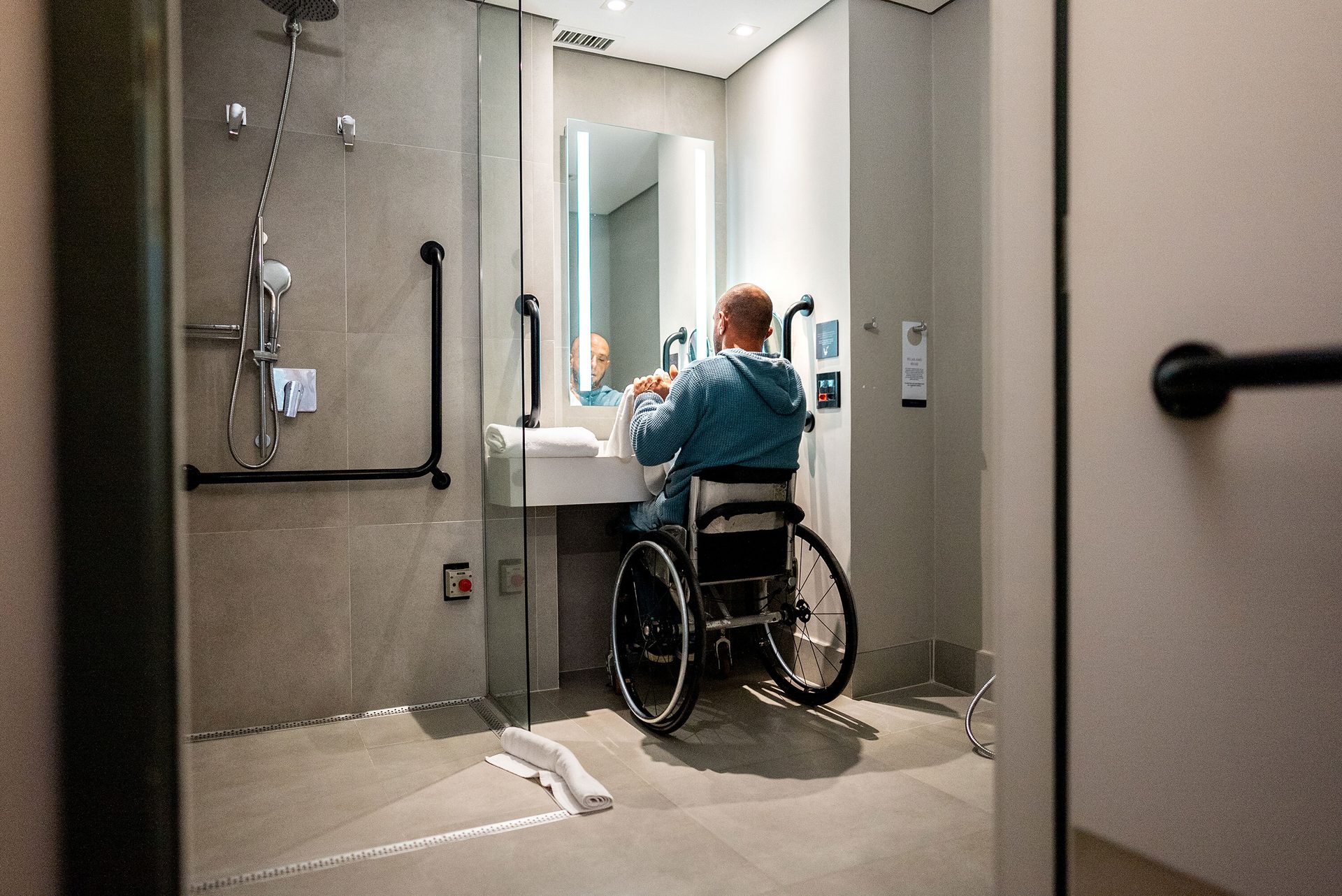
Accessibility is also playing a major role in the plans for the commercial bath and kitchen market. FG Trade / E+ / Getty Images
The commercial bath and market sector is undergoing notable evolution caused by shifting focus, sustainability mandates and heightened expectations from business owners and consumers alike. As demands shift and priorities change, here’s what we can look forward to in the commercial bath and kitchen market.
According to the American Institute of Architect in their Consensus Construction Forecast, nonresidential construction spending is expected to experience some modest growth of 2.2% in 2025 and 2.6 in 2026. More specifically, commercial construction spending is anticipated to increase by 1.7% this year, and 4.6% in 2026. However, while these figures do indicate growth, the AIA states that such small increases may not keep pace with the rising costs of material and labor.
What markets are growing?
With non-residential construction projected to grow, the bath and kitchen segment stands to benefit from an increased investment in commercial interiors. According to industry experts, they’re seeing particular growth in the hospitality market. Brad Mueller, vice president of communications at Charlotte Pipe, attributes part of this success in hospitality to the “COVID pandemic hangover” being nearly over. According to MMCG Invest, there has been a surge in conversations and renovations in lieu of new builds. In 2024, there was an all-time high number of hotels in the conversion pipeline – over 1,300, as well as around 660 hotels undergoing major renovations.
Director of PVF and Commercial Plumbing Sales at APR Supply Co., Pete Garcelon, also notes an increase in product movement in retail centers — specifically fast food, retail strip centers and grocery stores. He’s also seeing activity in the construction of schools and education centers, including early childhood centers. Federal government facilities remain a constant, though they are not as popular due to budget cuts. Senior Commercial Sales Manager at Oatey Co., Evan Novak, also notes an increase in data center construction.
What’s trending?
With marginal growth in several different markets, it’s important to also take note of what products and ideas are becoming popular. Unsurprisingly, sustainability is expected to continue to be a major factor in the commercial market in the coming years.
Sustainability has been a major buzzword in the industry, and that isn’t changing anytime soon. Manufacturers are incorporating sustainability into their products and design strategies in response to regulations, client demand and ESG (environmental, social and governance) goals.
“We’re seeing sustainable power options gain traction because people don’t want to change batteries all the time. Our goal is to offer fixtures that are hands-free, trouble-free and optimize water savings.” said Dan Danowski, product manager for Finish Plumbing at Zurn Elkay. “More and more states are adopting aggressive water saving policies, particularly around faucets and flush valves. We are prepared to support aggressive water savings policies with compliant, high-performing products.”
Similarly, there is increased focus on clean water in commercial buildings, and educational ones, due to changing regulations. “The Clean Drinking Water Access Act, and amendments to the Child Care Organizations Act — collectively known as the Michigan Filter First Legislation — requires all Michigan public schools and daycare centers to install bottle fillers with PFOS filters by the end of the 2025-26 school year.” said to Morgan Kish, Sloan’s director of product development. “As a result, Sloan is working with schools across the state to meet this legislation to protect children statewide — and beyond — from exposure to lead in drinking water.”
Companies like Sloan and Zurn Elkay Water Solutions are focused on creating products that not only meet the current regulations, but exceed them. After all, things are changing quickly; what meets all regulatory standards today may not in just a few years. Companies need to anticipate that these rules will change, and be ready to adapt. “Code regulations are constantly evolving, requiring manufacturers to stay agile and ensure their products meet increasingly stringent and dynamic compliance standards,” according to Bob Carter, product manager.
Smart products are expected to continue to grow in popularity in the commercial market. “Smart and connected restrooms are the future. We expect continued growth in demand for systems that help save money, increase uptime, and offer remote monitoring that makes maintenance more efficient.” Dan Danowiski told us. “Smart and connected products allow teams to do more with fewer people, which is essential in today’s commercial restroom market.” Touchless faucets, automatic flush valves and leak detection systems can reduce water waste and help business and building owners to monitor and respond to problems quickly.
Commercial construction spending is anticipated to increase by 1.7% this year, and 4.6% in 2026. However, while these figures do indicate growth, the AIA states that such small increases may not keep pace with the rising costs of material and labor.
Accessibility is also playing a major role in the plans for the commercial bath and kitchen market. According to Morgan Kish from Sloan, “Historically, specifiers have incorporated ADA into a portion of restroom design through elements such as a lower height urinal, a single ADA stall with a water closet or a single sink mounted closer to the ground. But now, there is a push to make full restrooms ADA-compliant. At Sloan, we’re delighted to see this inclusive trend taking shape, and we manufacture a wide range of products for ADA compliance to deliver an accommodating restroom environment for everyone.”
Business owners are aiming to create bathrooms that are fully accessible to their customers. Inclusive design will be a major component shaping the future of the commercial market.
Challenges
There are many issues that industry experts believe are ahead. One major problem that will likely continue to affect the industry is the labor shortage. Evan Novak said, “Consistent, skilled labor is always in demand for GCs and installers in the commercial space.”
Baby Boomers are retiring soon, and newer plumbers simply do not have the same training as previous generations, according to Kish. Skilled labor has not been a priority for the upcoming generation, which focused more so on higher education. However, with President Trump’s recent “Preparing Americans for High-Paying Skilled Trade Jobs of the Future” Executive Order, many industry professionals are hopeful about the future of the workforce.
Some companies are taking proactive action, like Sloan’s current work on a hands-on training facility. They’re also addressing the lack of skilled workers by implementing smart apps that can alert home and business owners to issues and provide them with on-demand training and maintenance videos. “Smart and connected products allow teams to do more with fewer people, which is essential in today’s commercial restroom market,” according to Dan Danowiski.
Another major issue that industry experts anticipate product and material shortages and fluctuation prices to remain an issue. Price uncertainty, partially caused by tariffs, and supply chain disruptions could cause delays in building or renovating. “Some projects are initially quoted 6-9 months out, and sometimes longer, because of this, costs and pricing are at the forefront for our customers working on commercial work.” Evan Novak said. He reports that Oatey is working to keep more products and inventory on-hand to counter this issue.
Overall, experts in the industry expect very marginal growth this year; likely in the single digits. Despite challenges created by price uncertainty and labor shortage, companies are staying on top of this ever-changing landscape to ensure that the commercial bath and kitchen market continues to grow through the implementation of accessible design, smart products and sustainable practices.
ABOUT THE AUTHOR: