MARCH 2026


feature
Navigating the new freight reality
Geopolitical tensions, labor constraints and rapid technology adoption are reshaping how distributors manage transportation risk.
By Carolyn Heinze
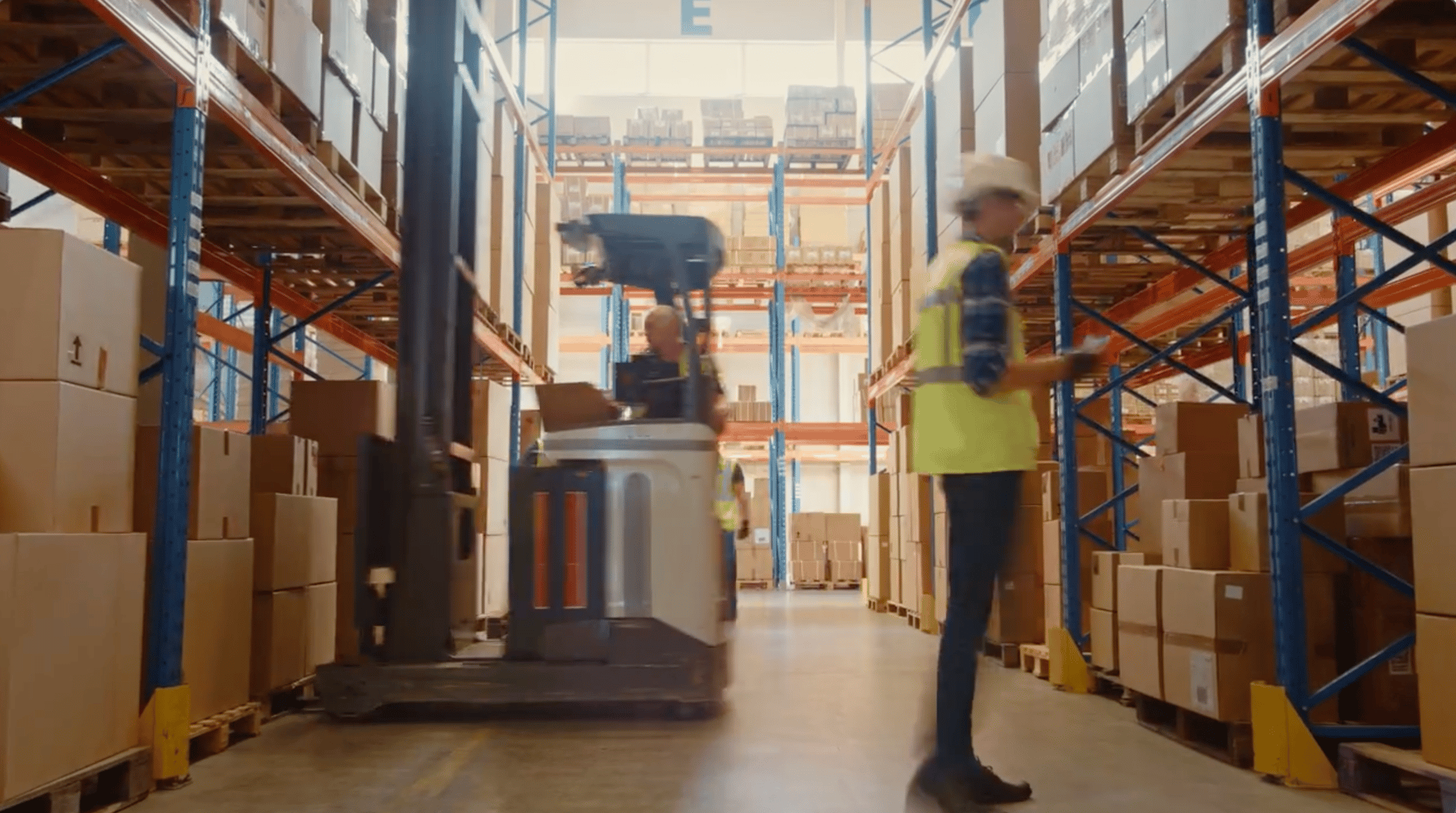
halbergman / Creatas Video / Getty Images
Few would argue that transporting cargo from one place to the next isn’t complicated. Even during the best of times, there are (literally) so many moving parts to account for, and one tiny blip in the process can produce big (read: expensive) problems. Today, ongoing commercial, environmental, and geopolitical developments are making the management and movement of fleets and freight an ever-changing affair.
This is true regardless of the shipping method — be it via air, land, or water.
“A wave of new regional policies around the world is certainly adding complexity to trade,” observed Joe Kramek, president and CEO at the World Shipping Council, an industry group with headquarters in Washington, D.C. “From tariffs and port fees to differing climate rules and export restrictions, governments are introducing measures that reflect national priorities but increase cost and uncertainty.”
This puts pressure on providers. Kramek uses his own segment of transportation and freight as an example: “These policies directly affect how liner shipping operates, because shippers whose cargo we carry are constantly adjusting by surging, stopping, or redirecting their bookings,” he illustrated. “The result for carriers is volatile demand and constant network adjustments. While shippers can act quickly to change a booking, it takes much longer for carriers to adjust global shipping networks.”
Navigating through the fog: CSCMP’s Annual State of Logistics Report, published in 2025 by the Council of Supply Chain Management Professionals, a trade association based in Lombard, Ill., and Kearney, a business consulting firm with headquarters in Chicago, Ill., a growing number of shippers are relying on 3PLs (Third Party Logistics Providers) in response to market uncertainty. In response, the report argues that 3PLs must be more agile, provide alternate routes, and offer flexible, cost-transparent contracts. This is a significant shift for this segment of transportation and freight; traditional models were based on fixed routes, and pricing applied a cost-plus formula that accounted for the services customers were taking advantage of.
Trade lane transformation
Gopal Ramasubramaniam, global leader in the Supply Chain & Logistics Practice at Frost & Sullivan, a consulting and market intelligence firm with headquarters in San Antonio, Texas, observes that companies are reexamining their trade lanes, which is changing demand patterns.
“When you rethink freight lanes, naturally, the transportation or the freight capability for those needs to be met, Ramasubramaniam said.
While one may deduce that this is being driven by a combination of geopolitical and trade tensions, Ramasubramaniam argues that this trend began during the pandemic, when it became clear how reliant Western countries were on China — and how that country’s Covid strategy made them vulnerable to the resulting supply chain disruptions.
“This led to everybody looking at a China Plus One strategy, and a lot of substitution countries benefitted,” Ramasubraniam explained. Conflict in the Middle East has exacerbated these efforts, and organizations are looking to Africa, India, and Latin America as a result. “Some of the emerging economies like Africa have picked up in terms of volumes — not the kind of volumes [associated with] China, but the fact that a non-existent trade lane becomes one is something.”
AI and beyond
It’s no surprise that the transportation and freight markets have been experimenting with AI to gain efficiency and navigate a progressively complex landscape. In its report, Top 10 Supply Chain Trends in 2026, the Association for Supply Chain Management (ASCM), a non-profit for supply chain professionals, with headquarters in Cincinnati, Ohio, argues that AI can help companies improve forecasting by analyzing external factors and market trends in real time. It may also be used to improve fulfillment and routing. “In the coming year, this trend has strong potential to minimize human error, accelerate disruption response, lower operational costs, and boost transparency and service levels,” the report states.
Demand forecasting and inventory management are two key AI use cases for 3PLs, according to CSCMP and Kearney. They point to European trucking firm DPD and its Speedy app, which utilizes AI to forecast cost-effective transport; and Penske Logistics, whose platform by Augment helps to streamline allocation through its deep analysis of load status.
Other transportation and freight-related tech trends include:
Alternative transport. For e-commerce companies, ASCM notes that delivery drones and self-driving vehicles help shippers optimize the last mile. “These autonomous solutions are projected to significantly reduce delivery costs in 2026, proving especially valuable at serving remote and hard-to-reach areas,” its report states.
Biometrics. According to The 2026 State of Shipping and Logistics Report, published by WWEX Group, a shipping and logistics provider with headquarters in Dallas, Texas, companies are deploying biometric technology to secure facility, freight, and fleet access. In this environment, systems use facial recognition or fingerprints instead of keys or PINs. “By restricting dock doors, yard gates, and even truck or container locks to authenticated personnel, these systems cut down on fictitious pickups and cargo theft while creating a tamper-proof audit trail of who accessed freight, where, and when,” the report states.
Digital twins. AI-powered digital twin platforms let shippers simulate their transportation networks, WWEX highlights in its report. This gives them the luxury of testing, in a virtual environment, the effects of mode shifts and port disruptions, for example. The organization estimates that as these systems evolve, they will play a role in predicting the impact things like demand, tariffs, and weather have on service, and developing more efficient lane strategies.
Predictive analytics. CSCMP and Kearney note that predictive analytics give forwarders and shippers a better view into the supply chain thanks to the alerts these systems can deliver related to labor strikes, traffic, and weather. This also helps organizations reroute earlier so that things may continue to run smoothly. “While challenges remain in data sharing and operational complexity, the demand for smarter, tech-driven solutions is intensifying as forwarders respond to increasing shipper expectations, rising fuel costs, and environmental compliance pressures,” the report states.
RFID. WWEX points out that Radio Frequency Identification technology is replacing the need for manual bar code scanning, and is being embedded into smart labels to enable the tracking of individual items. “By automating scans at each handoff, RFID technology offers near-real-time visibility without slowing drivers or terminal workflows, improving tracking accuracy, reducing disputes, and strengthening chain-of-custody assurance across multimodal networks,” its report states.
While tech plays a lead role in moving products and providing supply chain visibility, the data it relies on is the real star . “[3PLs] are highly adept at analyzing data to facilitate live, end-to-end network visibility and network analysis (for instance, determining if there’s sufficient network density or identifying when it’s necessary to operate dedicated truckloads (TL) for select lanes),” the CSCMP/Kearney report states. Of course, these use cases are only as effective as the quality of the data that feeds them.
Demand forecasting and inventory management are two key AI use cases for 3PLs, according to CSCMP and Kearney. They point to European trucking firm DPD and its Speedy app, which utilizes AI to forecast cost-effective transport; and Penske Logistics, whose platform by Augment helps to streamline allocation through its deep analysis of load status.
Drivers wanted
In 2026 Freight Focus: The Transportation & Logistics Outlook, DAT Freight & Analytics, a freight marketplace operator based in Portland, Ore., encourages carriers to focus on driver retention by providing competitive compensation and benefits, and a good work culture. “A stable and experienced driver pool reduces turnover costs and ensures consistent, reliable service for customers,” states the report.
WWEX notes that some carriers are rolling out what it terms “freight wellness” programs that strive to decrease burnout among drivers and back-office support workers with the goal of increasing workforce retention, and improving operations and safety. Some of these efforts include the adoption of wearable tech that can monitor people for fatigue, the application of AI-driven predictive scheduling, cab design that prioritizes ergonomics, and mental health check-ins.
Further complicating things is a new regulation introduced by the Federal Motor Carrier Safety Administration (FMCSA) concerning non-citizen commercial driver’s licenses. Effective March 16, 2026, only “non-domiciled” drivers (those who work on American territory but live elsewhere, such as Canada or Mexico) with H-2A, H-2B, or E-2 visas are eligible to renew their commercial driver’s licenses (CDLs) or renew them. Those that fall under all other visa categories are not (however, individuals with current — valid — work status and CDLs may continue to drive until their license expires.
Labor law firm Jackson Lewis, with headquarters in New York, N.Y., estimates that this has the potential to decrease the commercial driver workforce by 194,000 over the next five years.
Sustainability: Still a priority
Considering the current administration’s view of sustainable development, some U.S.-based organizations have reined back on their ESG (Environmental, Social, and Governance) initiatives. Others have opted to continue their efforts, but less publicly.
On the global scale, however, ESG remains a priority. CSCMP and Kearney note that the International Maritime Organization, a United Nations agency based in London, England, U.K., and focused on safety, security, and pollution prevention, is driving the industry to reduce greenhouse gas emissions by 20 percent (or more) by 2030, based on 2008 levels, and 70 percent by 2040. As such, shipping companies are exploring fuel alternatives, such as carbon-neutral methanol, biofuels, and liquefied natural gas (LNG).
How distributors can respond
At the distributor level, the question remains: in a business climate where uncertainty reigns, how does one cushion their organization from a fluid transportation and freight market? For Steve Hopper, founder of Inviscid Consulting LLC, a consulting firm based in Atlanta, Ga., that is focused on logistics, supply chain, and warehousing, distributors should concentrate on improving their operations.
“If you are a distributor, you can’t really control what happens geopolitically, [and] you can’t really control what happens with fuel prices,” Hopper said. Distributors can, however, focus on things like optimizing the picking and consolidation of shipments, packaging items so they won’t get damaged, and following standardized processes — things that can make a significant difference, he argues. “The only thing you can really control are the aspects of your own operation.”
ABOUT THE AUTHOR: