



feature
Built to Scale, Designed to Stay Local: Lessons from Winsupply at 70
Winsupply’s 70-year model underscores how decentralized decision-making and strong leadership pipelines can sustain growth in a shifting market.
By Natalie Forster
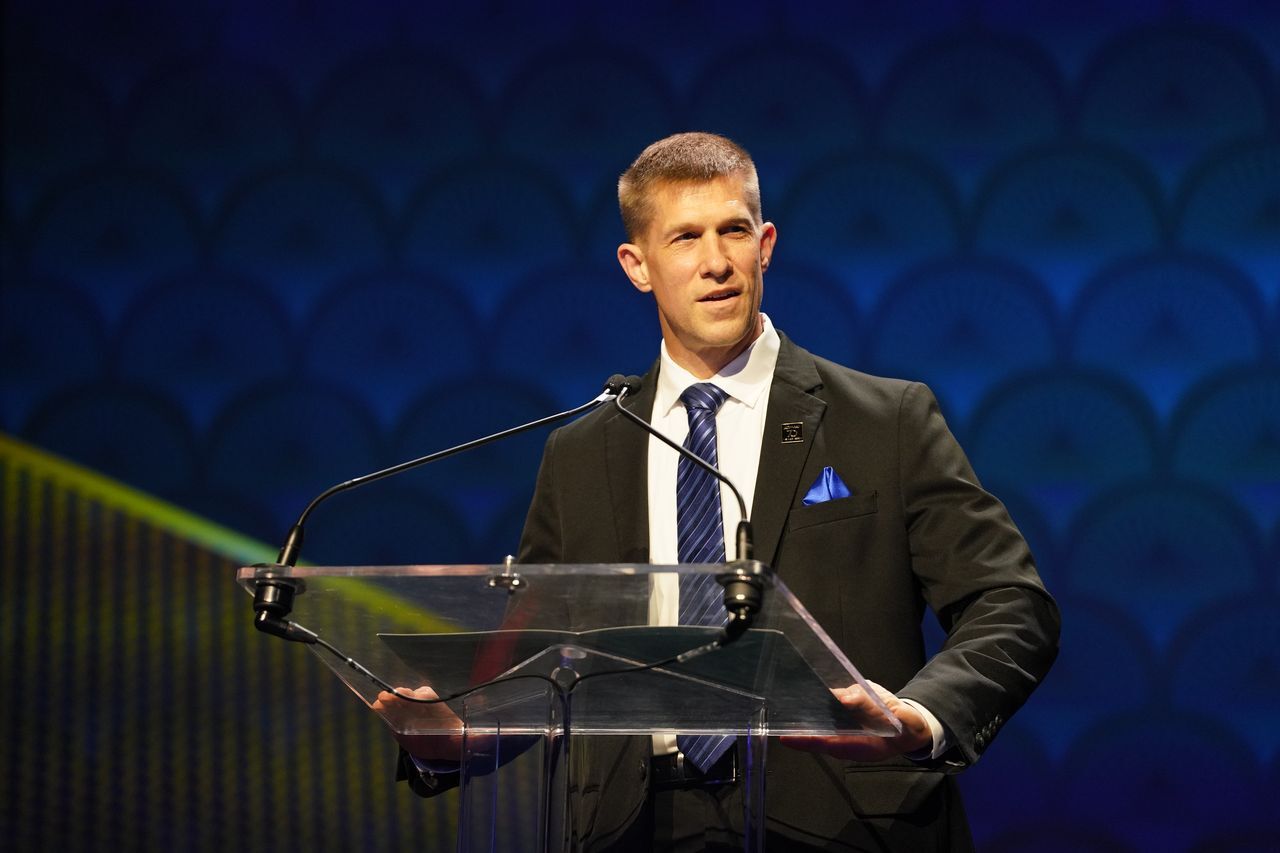
Jeff Dice, president of Winsupply, says the company’s growth continues to be driven by local ownership and decentralized decision-making. Photo courtesy of Christie's Photographic Solutions.
Seventy years in, Winsupply occupies a unique position in the PHCP-PVF distribution landscape. It is, by every measurable standard, a national player. Yet, it operates in a way that looks fundamentally different from the centralized models that have come to define much of the industry’s consolidation era.
The unique business model is the result of a business philosophy that has remained largely intact since the company’s founding in 1956 in Dayton, Ohio: build local ownership, empower decision-making at the branch level, and scale through people rather than layers of corporate infrastructure.
Today, that model spans nearly 700 local companies across the U.S., each operating with a high degree of independence while tapping into shared resources, vendor relationships and infrastructure. It is a structure that has allowed Winsupply to grow into one of the largest distributors in the country without fully resembling one.
A model built on local ownership
Ask Winsupply President Jeff Dice, who’s been with the business since 2004 and took over as president in 2023, what has driven the company’s ability to scale over seven decades, and the answer is straightforward.
“Local owners, local decision-making,” he says. “Having owners at every one of our companies is what allows us to scale without adding layers at the corporate level.”
That decentralized structure pushes responsibility, and accountability, outward. Decisions that might typically sit at headquarters in a traditional model are instead handled at the local level. The result is an organization that can grow without becoming overly centralized, a balancing act that has become increasingly difficult across distribution.
But autonomy alone does not explain the model’s longevity. Equally important is how those local companies interact with one another.
“What I’ve seen is a lot of our companies helping each other grow,” Dice explains. “Our top leaders want to pay it forward. They’re teaching the next generation how to lead.”
National scale, local execution
From the outside, Winsupply can appear comparable to national distributors. It competes across markets, negotiates with hundreds of vendors and operates a distribution network with significant purchasing power. But internally, the structure functions differently.
“We are a national player,” Dice says. “We just do it differently.”
The company provides centralized resources, proprietary technology, data platforms and vendor relationships, while leaving pricing, customer relationships and day-to-day operations to local leadership.
That hybrid approach, national scale paired with local autonomy, is often described as a “best of both worlds” model. In practice, it creates a different set of competitive dynamics.
Winsupply competes with national distributors, regional players and even single-location independents, often simultaneously. Yet its structure allows it to adapt locally in ways that more centralized competitors may struggle to replicate.
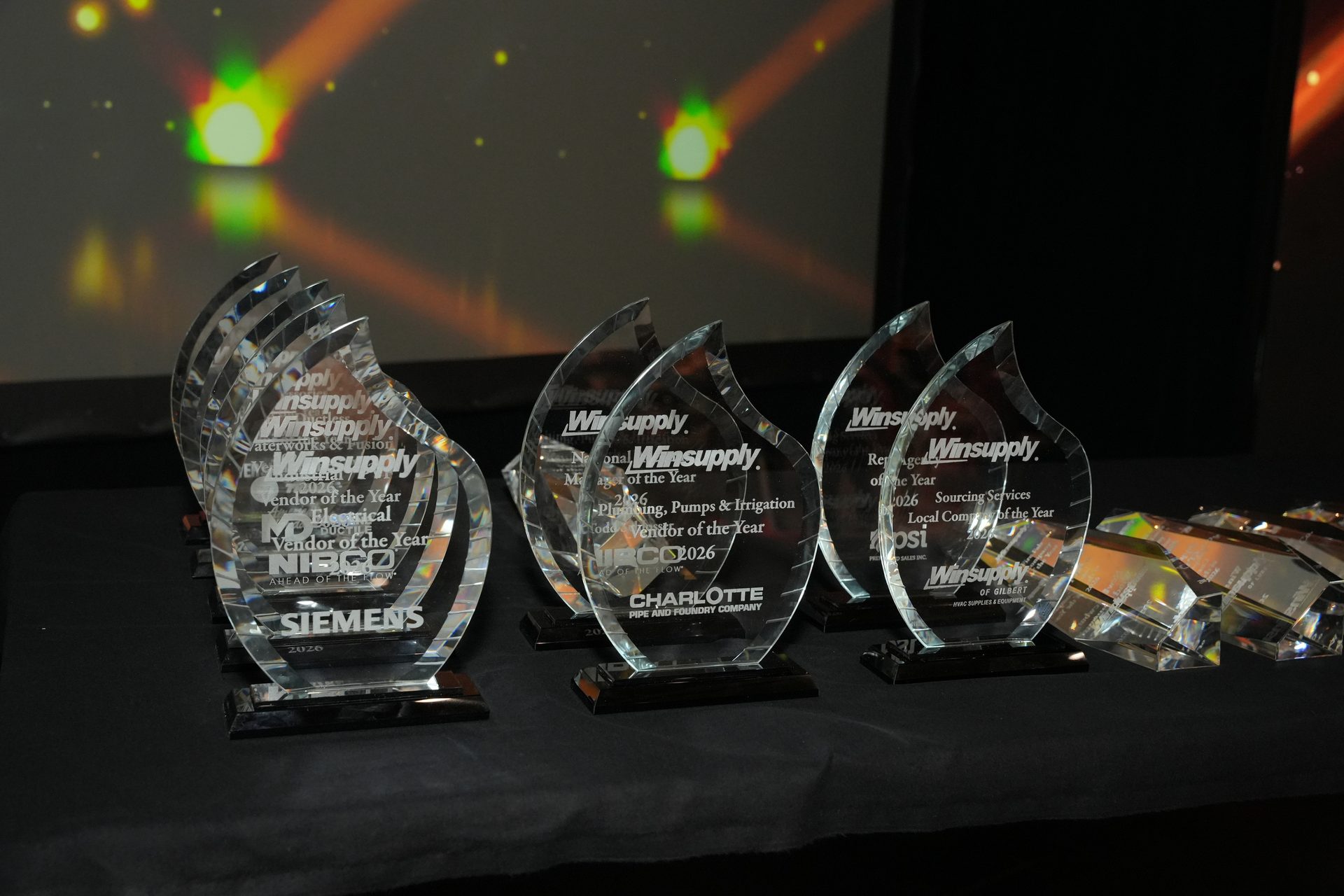
Winsupply’s network of nearly 700 local companies has earned recognition across the PHCP-PVF distribution industry. Photo courtesy of Christie's Photographic Solutions.
Growth in a more normalized market
According to Dice, residential activity remains flat to slightly down, constrained by high interest rates and affordability challenges. One telling data point: the average first-time homebuyer is now around 40 years old, up significantly from roughly 30 just over a decade ago. That shift reflects structural pressure in the housing market, and it continues to ripple through the distribution channel.
At the same time, other segments are providing stability. Multifamily construction is expected to see modest gains in the 3% to 5% range, while commercial work remains steady.
The most notable growth, however, is coming from industrial work, particularly large-scale projects tied to data centers and infrastructure. “Those projects are going gangbusters right now,” Dice says.
This uneven demand environment reinforces the reality that growth is no longer broadly distributed; it is concentrated, project-driven and increasingly tied to specific verticals.
“If we’re going to grow, it’s going to come from share,” Dice notes.
Pricing, volatility and local control
Metal pricing volatility and commodity swings continue to shape distributor strategy, but here again, Winsupply’s structure pushes decisions to the local level. Pricing, purchasing and customer communication are all handled by individual companies, with support from centralized tools and data.
The organization provides visibility into commodity trends and offers pricing optimization tools, but final decisions remain decentralized.
That approach reflects a broader industry tension. As pricing becomes more complex, distributors are investing in technology to guide decisions, but many still rely on local market knowledge to execute them effectively.
In Winsupply’s case, the goal is to blend both. “We give them tools to optimize pricing,” Dice explains. “But each company makes decisions based on their market.”
Building leaders from within
Winsupply’s model centered around workforce development. At the local level, hiring decisions are made independently. But culturally, there is a shared expectation that every hire has long-term potential.
“We always say we’re hiring future presidents,” Dice says.
According to the company, roughly two-thirds of its current presidents started in entry-level roles such as drivers or warehouse workers. Dice explains that leadership is built internally, over time, rather than imported from the outside.
At the corporate level, Winsupply supports that pipeline through structured training programs, leadership development initiatives and a growing internship program that now attracts thousands of applicants annually.
AI, but with a practical focus
Like much of the industry, Winsupply is investing in AI and automation. But rather than treating it as a broad, abstract concept, the company is focusing on specific operational use cases.
“The biggest impact today is in forecasting, quoting, takeoffs and pricing,” Dice says.
One example is a newly launched AI-driven forecasting system designed to optimize inventory across its distribution network. The tool replaces legacy systems and is expected to reshape how inventory is allocated and managed.
Early results suggest not necessarily less inventory, but different inventory, more aligned with actual demand patterns.
Looking ahead, Dice believes AI will have an even broader impact, but not necessarily in the way some expect. “I think AI is going to level the playing field from a knowledge standpoint,” he says.
When I look at our top performers, they all have that same grit. They know their purpose, they build strong teams around them, and they’re simply going to outwork the competition.
The enduring role of grit
If technology levels knowledge, what differentiates performance? For Dice, the answer is not particularly technical.
“The top leaders all have a special grit,” he says. “They’re going to outwork the competition.”
Across Winsupply’s network, high-performing leaders share a consistent set of traits: a clear sense of purpose, strong cultural alignment and an ability to build teams that complement their strengths and weaknesses.
In other words, while tools and data may become more standardized, execution remains deeply human. That perspective aligns with a broader industry reality. Distribution, at its core, is still a relationship-driven business. Speed, reliability and ease of doing business continue to outweigh many other factors in customer decision-making.
“The customer still wants product fast and wants to work with someone that’s easy to do business with,” Dice says.
Lessons from missteps
Winsupply’s current position is not the result of a flawless trajectory. Dice points to two key areas where the company had to adjust.
The first was its acquisition strategy. Early on, the process was heavily financial, focused on numbers rather than people. That approach proved limiting.
“We realized we’re not acquiring assets, we’re acquiring people and relationships,” he says.
After reworking its approach to prioritize cultural and leadership alignment, the company has completed dozens of acquisitions with a significantly higher success rate.
The second shift was more foundational. Roughly eight years ago, the organization recognized that it had drifted from its core purpose of building entrepreneurs, becoming overly focused on growth and financial performance.
The response was a deliberate effort to document and reinforce its underlying philosophy, leading to new training programs and a renewed emphasis on its original mission.
Today, that mission remains central. “Our goal is to build the premier platform for entrepreneurs,” Dice says.
A model to watch
At 70 years, Winsupply’s model is not easily replicated, nor is it intended to be. “It’s not a model that fits everyone,” Dice acknowledges.
In a distribution landscape increasingly defined by consolidation and standardization, Winsupply represents an alternative path, one that emphasizes decentralization, internal leadership development and long-term cultural alignment.
It demonstrates that scale does not have to come at the expense of autonomy, that growth can be built through people as much as capital, and that even in a rapidly evolving market, foundational principles still matter.
As the industry continues to navigate its next phase, shaped by technology, consolidation and shifting demand, those lessons may prove as relevant as ever.
ABOUT THE AUTHOR: