
FROM THE EDITOR
By Natalie Forster, Chief Editor
Built for disruption
Extreme weather, volatile energy markets and uneven construction demand.
Laurent Fady / iStock / Getty Images Plus
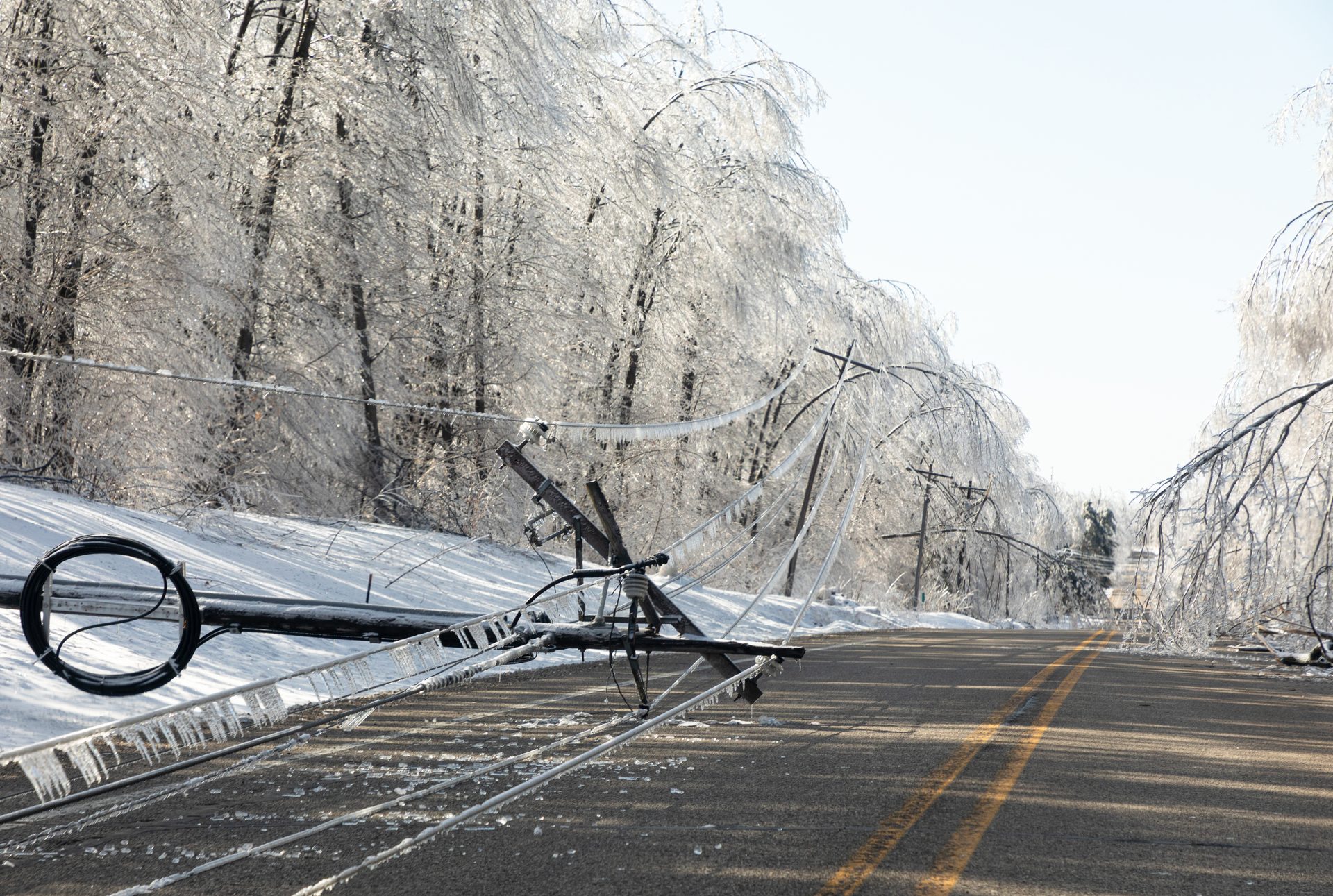
Late January’s widespread winter storms didn’t just test power grids and roadways; they stress-tested the PHCP-PVF supply chain in real time. According to Reuters and the Associated Press, a massive winter system stretched across more than 30 states, disrupting freight networks, grounding thousands of flights and knocking out power to millions of customers during peak heating demand.
For plumbing, heating and PVF distributors, the impact was immediate and familiar: inbound shipments delayed, outbound deliveries missed, emergency calls piling up — and customers who still needed material now, regardless of weather, staffing or logistics constraints.
Extreme weather is now colliding with already-tight freight capacity, volatile energy markets and a construction economy that increasingly demands speed, certainty and risk sharing. During the recent cold snap, Financial Times and Reuters reported U.S. natural gas prices surged to their highest levels in more than three years, driven by freeze-offs that curtailed production just as heating demand spiked. The U.S. Energy Information Administration (EIA) noted that residential and commercial gas consumption jumped sharply during the same period, putting further pressure on prices.
Wholesale electricity markets followed a similar pattern. Power prices spiked across parts of the Midwest, Texas and the Southeast as grid operators scrambled to meet demand during extreme cold, a reminder that energy volatility doesn’t stay confined to utility bills — it flows through freight costs, warehouse operations and contractor job budgets.
For distributors, these aren’t abstract market stories. Higher fuel and power costs show up quickly in freight surcharges, operating expenses and customer behavior. Contractors scrutinize quotes more closely, push for price locks and expect distributors to help manage uncertainty, even when underlying costs remain anything but stable.
Shock absorbers
This is where the distributor’s role continues to evolve. Increasingly, wholesalers are acting as shock absorbers between global volatility and local jobsites.
Material pricing remains uneven across key PHCP-PVF categories, influenced by energy costs, trade policy and geopolitical uncertainty. In its latest outlook, Dodge Construction Network reports that while overall construction growth is expected to remain modest in 2026, cost pressures tied to labor, materials and logistics persist, particularly in complex, infrastructure-heavy projects.
At the same time, contractors continue to face labor constraints. FMI and Associated Builders and Contractors have both warned that skilled labor shortages remain one of the industry’s biggest structural challenges, pushing contractors to minimize inventory exposure and financial risk wherever possible. More often than not, that risk moves upstream to distribution.
Yet not all construction segments are softening. Data center construction remains one of the strongest growth markets, fueled by artificial intelligence, cloud computing and digital infrastructure investment. Dodge data shows data centers as one of the fastest-growing nonresidential categories, even as other commercial segments remain uneven.
For PHCP-PVF distributors, this shift matters. Data centers don’t tolerate delays. They demand prefabrication, tight coordination and near-perfect execution, and they reward distributors who can manage complex bills of material, stage inventory accurately and deliver reliably at scale.
Volatility isn’t an occasional challenge for distributors anymore, it’s the operating environment. From extreme weather and energy-market swings to freight uncertainty and labor shortages, today’s PHCP-PVF supply chain is being tested constantly.
Supply chains that don’t ‘normalize’
For years, the industry talked about supply chains “returning to normal.” That conversation has quietly ended.
Instead, distributors are asking a more pragmatic question: How do we operate when disruption is constant?
Recent coverage from Reuters and Supply Chain Dive underscores that extreme weather, energy volatility and geopolitical risk are now among the top drivers of logistics uncertainty heading into 2026. In response, distributors are rethinking long-held assumptions about just-in-time inventory, single-source suppliers and lowest-cost freight strategies.
Dual sourcing is becoming standard practice. Freight reliability is often valued as highly as freight cost. Inventory strategies are being revisited SKU by SKU, balancing service levels against carrying costs. Branch managers and buyers are making daily decisions that directly affect customer loyalty, especially when conditions change quickly.
When storms shut down regions or delay critical inbound shipments, the distributors who fare best aren’t necessarily the leanest. They’re the most prepared.
Prefab, planning and labor reality
Labor constraints intersect directly with distribution strategy. According to ABC and FMI, the construction industry will need hundreds of thousands of additional skilled workers over the next several years just to meet projected demand, shortages that are especially acute in mechanical and industrial trades.
That reality is accelerating the shift toward prefabrication and off-site assembly. For distributors, prefab isn’t just a contractor issue, it’s a coordination issue. Prefabricated plumbing and mechanical systems require earlier engagement, better forecasting and deeper technical collaboration before product ever hits the dock.
When executed well, prefab shortens schedules, reduces jobsite labor exposure and limits weather-related delays, lessons reinforced by this winter’s disruptions. In today’s environment, prefab has become as much a risk-management tool as a productivity strategy.
Resilience as a strategy
Taken together, extreme weather, energy-market volatility, uneven construction demand and persistent supply-chain complexity, the message is clear. Resilience has become a core competitive advantage in PHCP-PVF distribution.
That resilience shows up in inventory decisions, supplier relationships, workforce investment and technology adoption. It shows up in how distributors communicate with customers when conditions change, and how quickly they can pivot when they do.
As we move through 2026, Supply House Times will continue to focus on the strategies and leadership decisions helping distributors navigate this reality. Because disruption isn’t going away. But for those prepared to handle it, disruption can become an opportunity.